




header detail 1
header detail 2
RBTechFS
  • Home
  • Who are we
  • What do we do
  • Blog
  • Contact Us
menu
close

Need Help? Talk to an Expert

+1 (758) 729-4361
RBTechFS
  • Home
  • Who are we
  • What do we do
  • Blog
  • Contact Us

Need Help? Talk to an Expert

+1 (758) 729-4361

Selecting The Right IT Governance Framework

Home Selecting The Right IT Governance Framework
  • Written by rbtechfs
  • March 30, 2026
  • Comments Off on Selecting The Right IT Governance Framework
Trends

COBIT and ITIL show up in every serious conversation about enterprise IT management, and for good reason. They’re the two most widely referenced frameworks in the space. But they solve different problems, and conflating them leads to poor implementation decisions.

COBIT is a governance framework. It answers the question: “Are we managing technology risk and aligning IT investments with business strategy?” ITIL is a service management framework. It answers a different question: “Are we delivering IT services effectively and improving them over time?”

This article breaks down the real differences between COBIT and ITIL, shows when each one fits, and explains how organizations use them together – without the textbook filler.

What Is COBIT?

COBIT (Control Objectives for Information and Related Technologies) is an IT governance framework developed by ISACA. Its current version, COBIT 2019, provides a structured model for governing enterprise information and technology.

In practical terms, COBIT helps leadership teams answer questions like: Are IT investments producing business value? Are we managing technology risk at an acceptable level? Do we meet regulatory and compliance requirements?

The framework operates at the board and executive level. It defines governance objectives, management objectives, and a set of components (processes, organizational structures, policies, culture) that work together to ensure IT supports strategic goals. COBIT doesn’t prescribe exactly how to run your service desk or deploy software. Instead, it provides a control and oversight layer that sits above operational processes.

What makes COBIT distinct is its emphasis on alignment and accountability. It connects enterprise goals to IT goals through a cascade model, making it possible to trace any technology initiative back to a business outcome. For organizations operating in regulated environments – financial services, healthcare, energy – that traceability is not optional.

What Is ITIL?

ITIL (the Information Technology Infrastructure Library) is an IT service management (ITSM) framework now maintained by PeopleCert (following its acquisition of AXELOS). The current version, ITIL 4, moved away from the older lifecycle model and introduced the Service Value System (SVS) as its core architecture.

ITIL 4 is built around a simple idea: everything IT does should contribute to value creation. The Service Value System includes the service value chain, guiding principles, governance, practices, and continual improvement – all designed to convert demand and opportunity into actual business value.

Where earlier ITIL versions focused on rigid lifecycle stages (strategy, design, transition, operation, improvement), ITIL 4 recognizes that work doesn’t flow in a neat sequence. It promotes flexibility, cross-functional collaboration, and iterative ways of working.

The framework defines 34 management practices grouped into general management, service management, and technical management. These cover everything from incident management and change enablement to workforce planning and deployment management. For organizations looking to improve how IT services are designed, delivered, and continuously improved, ITIL 4 provides the playbook.

COBIT vs ITIL: What’s the Main Difference?

The simplest way to frame it: COBIT governs, ITIL operates.

COBIT provides the governance structure – the oversight, control objectives, and strategic alignment that ensure technology decisions serve the business. ITIL provides the operational framework – the practices, processes, and value chain that make IT service delivery work day to day.

They address different layers of the same problem. COBIT asks: “Are we doing the right things?” ITIL asks: “Are we doing things right?”

This is why framing the choice as “COBIT vs ITIL” can be misleading. They’re not interchangeable. A large enterprise might use COBIT to define governance policies and risk thresholds, then use ITIL to structure how its service teams actually deliver against those policies.

COBIT vs ITIL Comparison Table
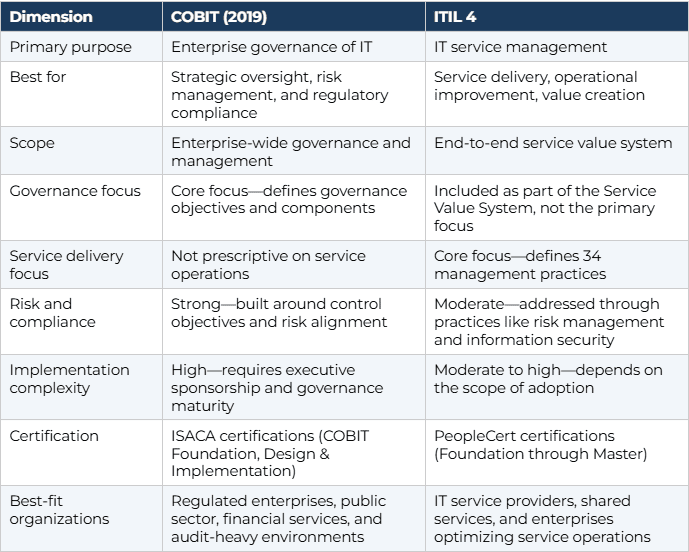
When To Choose COBIT

COBIT makes the most sense when governance is the primary gap. If your organization faces any of the following situations, COBIT should be on the table:

Regulatory pressure is high. Financial institutions subject to SOX, Basel III, or FCA requirements need a governance framework that maps IT controls to regulatory obligations. COBIT’s goal cascade and control objectives are purpose-built for this.

Audit findings keep surfacing the same issues. When internal or external audits repeatedly flag weak IT controls, the problem is usually structural, not operational. COBIT provides the oversight model to address root causes.

IT and business strategy are disconnected. If technology investments aren’t clearly tied to enterprise objectives – or if nobody can explain why a particular initiative matters to the business – COBIT’s alignment mechanisms close that gap.

You need to report on IT performance to the board. COBIT’s governance model gives leadership a structured way to evaluate whether IT is delivering value and managing risk, in language the board understands.

When To Choose ITIL

ITIL fits best when the challenge is operational – when you know your strategy but need a better system for executing it.

Service quality is inconsistent. If incidents pile up, resolution times are unpredictable, and users have lost confidence in the IT organization, ITIL’s structured practices bring order to service operations.

You’re scaling IT support across teams or geographies. ITIL 4’s service value chain provides a common operating model that works whether you have 50 people in one office or 5,000 across multiple regions.

Change management is chaotic. If releases cause regular disruptions and nobody owns the change process end to end, ITIL’s change enablement and release management practices bring structure without killing velocity.

Internal IT is being repositioned as a service provider. Many enterprises are shifting IT from a cost center to a value-creating function. ITIL’s focus on value co-creation and service relationships provides the operating model for that transition.

Can COBIT and ITIL Work Together?

Yes – and in many large organizations, they should.

COBIT and ITIL are complementary by design. COBIT defines what needs to be governed, controlled, and measured at the enterprise level. ITIL provides the operational practices that deliver against those governance requirements.

Here’s a concrete example: a European bank implementing a new digital payments platform. COBIT defines the governance structure – risk appetite, data residency requirements, control objectives for processing integrity, and the committee structure for oversight. ITIL defines how the IT teams actually build and run the service – incident response workflows, change enablement processes, service level agreements, and the continual improvement cadence.

Neither framework alone covers the full picture. COBIT without ITIL gives you governance policies with no operational teeth. ITIL without COBIT gives you well-run services that may not align with enterprise risk tolerance or strategic priorities.

Organizations that use both typically let COBIT set the direction and boundaries at the executive level, while ITIL drives execution and improvement at the operational level. The integration doesn’t need to be formal or all-at-once – many enterprises adopt COBIT for governance and gradually embed ITIL practices where service delivery needs the most attention.

COBIT vs ITIL for Different Types of Organizations

Startup or Scaling SaaS Company

Neither COBIT nor ITIL is typically a priority for a 20-person startup. But once a SaaS company reaches 100+ employees, has enterprise customers, and starts fielding security questionnaires, lightweight adoption of ITIL practices (incident management, change enablement) usually comes first. COBIT enters the picture if the company pursues SOC 2 Type II or handles regulated data.

Mid-Size Enterprise

Mid-size companies (500–5,000 employees) often benefit from ITIL to standardize service delivery across growing teams, especially after acquisitions or rapid hiring. COBIT may be adopted selectively – for instance, implementing specific governance processes to satisfy audit requirements or prepare for a public listing.

Large Regulated Enterprise

This is where both frameworks earn their keep. Banks, insurers, healthcare systems, and energy companies typically need COBIT’s governance structure to satisfy regulators and boards, alongside ITIL’s operational practices to keep complex service environments running. These organizations often have dedicated governance teams managing COBIT adoption and separate service management teams working within ITIL.

IT Consulting or Managed Services Provider

Managed service providers typically anchor on ITIL because their business model is service delivery. ITIL certifications signal operational maturity to clients. COBIT may be used internally for governance or offered as a consulting capability for clients in regulated sectors.

How To Decide Between COBIT and ITIL

A simple decision framework:

Start with the problem. If your primary challenge is governance – alignment, oversight, compliance, risk management – start with COBIT. If your primary challenge is operational – service quality, delivery speed, process consistency – start with ITIL.

Consider your regulatory environment. Highly regulated industries almost always need COBIT in some form. ITIL alone won’t satisfy an auditor asking about IT control objectives.

Assess organizational maturity. If basic service management processes don’t exist yet, implementing COBIT’s governance layer will have nothing to govern. Build operational foundations with ITIL first, then add governance structure.

Plan for both. Most enterprises above a certain size end up needing elements of both. The question isn’t which one, but which one first – and how they’ll integrate.

Conclusion

The COBIT vs ITIL question isn’t really a competition. COBIT gives you the governance architecture to ensure technology supports business strategy and meets compliance requirements. ITIL gives you the operational system to deliver and improve IT services. One sits at the board level; the other sits with the teams doing the work.

For most enterprises, the right approach isn’t choosing one over the other- it’s understanding which problem you need to solve first and building from there. Start with the gap that’s causing the most pain, adopt the framework that addresses it, and plan for integration as your organization matures.

If governance, compliance, and strategic IT alignment are priorities for your organization, it’s worth having a structured conversation about where frameworks like COBIT and ITIL fit into your architecture. Book a 30-minute consultation with Intellectsoft’s team to see how we’ve helped regulated enterprises build governance-ready technology foundations – backed by ISO 27001:2022, ISO 9001:2015, and an NPS of 80.

Is COBIT better than ITIL?

No—they solve different problems. COBIT is a governance framework focused on strategic alignment, risk, and compliance. ITIL is a service management framework focused on delivering and improving IT services. Comparing them directly is like asking whether a CFO is better than an operations manager. Both roles matter; they just operate at different levels.

Is ITIL a governance framework?

Not primarily. ITIL 4 includes governance as a component of its Service Value System, but governance is not ITIL’s core focus. If governance is your main requirement, COBIT is the more appropriate framework.

Can small companies use COBIT?

They can, but few do in practice. COBIT is designed for enterprise governance and tends to add value in organizations with complex regulatory requirements or multiple stakeholders who need structured oversight. Smaller companies usually get more immediate ROI from ITIL practices that improve day-to-day service delivery.

Can COBIT and ITIL be implemented together?

Yes, and they’re designed to be complementary. COBIT provides the governance and control layer; ITIL provides the operational service management practices. Many large enterprises use both, with COBIT guiding strategic decisions and ITIL driving service execution.

Which one should I implement first?

It depends on your biggest gap. If you lack governance structure and face regulatory pressure, start with COBIT. If your IT services are inconsistent and your teams need a common operating model, start with ITIL. In most cases, ITIL practices are quicker to implement and show operational improvements faster, so organizations often begin there and layer COBIT on top.
The hospitality industry depends a lot on keeping customers happy, but it’s getting harder to attract and keep them. The pandemic hit this industry hard, and now market competition is tougher than ever, with competitive offerings swaying customers. Hospitality businesses are willing to spend big to win customers back. The main questions for many are: how can we stay ahead of the competition, keep our customers, and increase revenue? Keep reading—we’ve got some answers.

Customers today have so many options that getting their attention is a real challenge. It’s not easy to make them choose your business over others. What worked 10 years ago doesn’t work the same way now. Back then, people often chose businesses based on reputation. But with new types of businesses (boutique hotels, craft cafes) popping up or big enterprises getting a new strategy, expectations have changed. The good news is these businesses have shown what works: great customer service. They focus on personalizing the experience, making things easy for customers, offering loyalty programs, and using smart technology.

In this article, we’ll explore these tech strategies and show you how they can help your business grow, and double the revenue. Keep reading to learn more!

The Importance of Customer Satisfaction in the Hospitality Industry

Customer satisfaction, which equals exceptional customer experience, is the backbone of the hospitality industry. It plays a central role in driving revenue and loyalty, as satisfied customers are more likely to return and recommend a hotel, restaurant, or other hospitality business to others. In fact, a study by the Harvard Business Review found that a 1% increase in customer satisfaction can lead to a 0.5% increase in revenue. Moreover, loyal customers are more likely to forgive mistakes and continue doing business with a company, even if they experience a negative encounter.

Let’s quickly review the challenges the hospitality industry is facing right now so we can move on to the solutions and our case studies.

Challenges in Hospitality

As businesses navigate the changes in the hospitality industry, there are some key areas where a little improvement can go a long way. From improving customer service to embracing digital transformation and tackling labor shortages, we’ll take a closer look at today’s biggest challenges—and, more importantly, how technology can step in to help. Let’s get started!

Poor Customer Service

Even with strong and high-quality business offerings, poor customer service can drive potential customers and existing customers away. Common issues include:

  • Long wait times in customer service queues (it is worth remembering that our attention spans 8 seconds, and we live in a very busy world, so quick and efficient responses are more important than ever.)
  • Poorly trained customer service representatives
  • Lack of follow-up
  • Services not being done properly or quickly
  • Recall issues that require multiple service calls

These problems can frustrate customers. But, at Intellectsoft, we believe that the right approach, combined with technology, can address them effectively.

Digital Transformation Gaps

Approximately 50% of hotels are adopting new technologies, with 43% automating repetitive tasks and 39% upgrading existing systems.
Source: workstaff.app

Source: workstaff.app

While many businesses are adopting digital solutions, some still struggle with outdated systems and fragmented data. Legacy companies often face chaos when trying to manage their data and create new systems or add features.

Some of the recent examples include clients coming to us to create AI solutions for their services while their data simply was not ready for the advanced tasks. We advise stepping back, communicating with a company objective, and working on keeping the data clean (centralized, structured, and segmented).

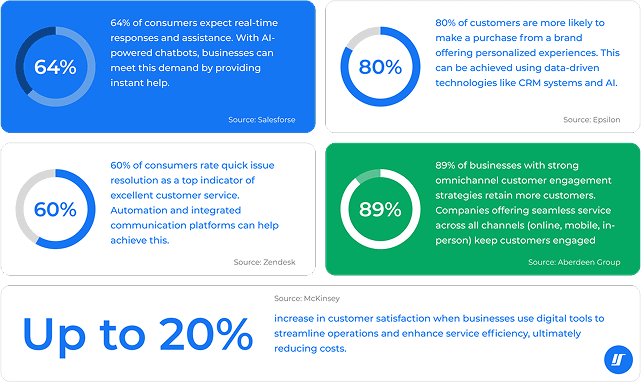
When we’re asked to create advanced systems using AI, we always emphasize the importance of organized data. To train AI and build such complicated systems that truly work, you need to start from the very beginning—collecting, storing, centralizing, and organizing it. We encourage our clients to align all departments to work internally on the data so we can create a unified digital system that delivers personalized experiences.

If you’re unsure where to start with your data, we can help. Collecting feedback at various touchpoints along the customer journey is crucial for gaining insights into customer satisfaction and loyalty. Book an IT consultation with us, and our experts will guide you in mapping out a path to get more from your data and build a system that works for your business and team.

Reskilling Staff

The pandemic hit hard in early 2020, especially for the hospitality and travel industries. Even five years later, many businesses are still feeling the impact. Recruiting and retaining skilled staff has become a major challenge post-pandemic.

Reskilling to address technology’s impact is of utmost importance, as about 40% of hotel General Managers place it among their top three workforce challenges.

Source: Deloitte

We strongly believe that adopting the right technology can help. For example, creating an app to train your staff not only saves time but also ensures consistency in learning. AI assistants can also work alongside your team, helping with tasks like recruitment (providing industry insights, crafting emails) and staff training. Imagine having an app dedicated to making your team’s work easier and more efficient!

How Technology Tackles These Challenges and Supports a Customer-Centric Hospitality Culture

Automation, AI, and similar technologies may threaten many. However, the debate about replacing humans isn’t about that—it’s about cooperation and working hand in hand with technology to achieve the highest standards and establish brand-new “golden standards.” Technology is here to assist staff in listening to and collecting customer insights from data.

Let’s review some of our cases to see examples of how technology helps improve customer experience and supports customer service.

Examples of Intellectsoft projects

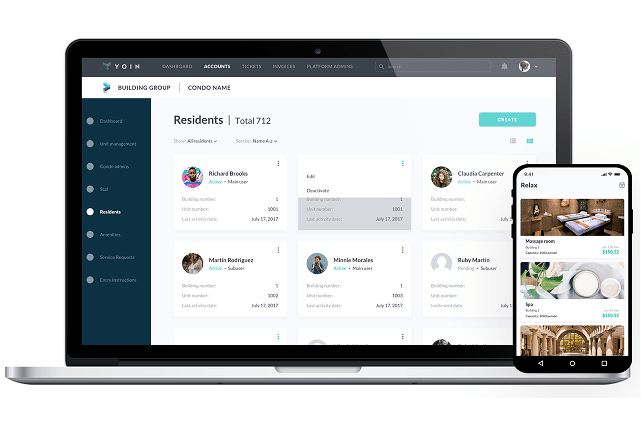
Property management systems (PMS)

We created a web platform and mobile app that makes managing daily tasks easier and offers extra services to improve residents’ experience. It gives a clear overview of daily activities and helps with managing units and users. Residents can easily book amenities, submit service requests, and report incidents. The platform also includes features for equipment management, key instructions, workflows, and custom permissions. This makes it easier for staff to stay on top of equipment and ensure residents have all the information they need. Plus, tools like announcements, quick votes, a forum, and a community calendar help build a connected and engaged community.

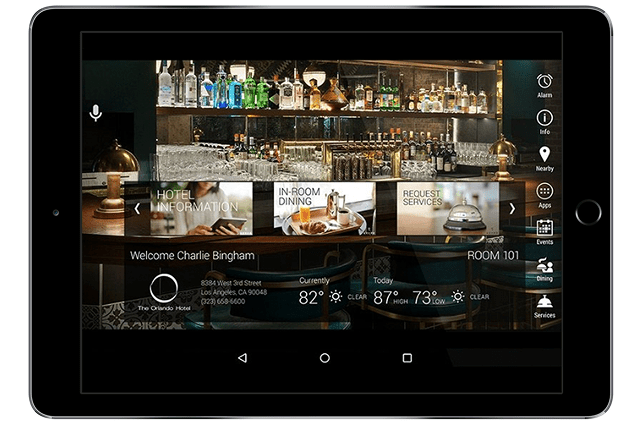
Guest Experience Management App

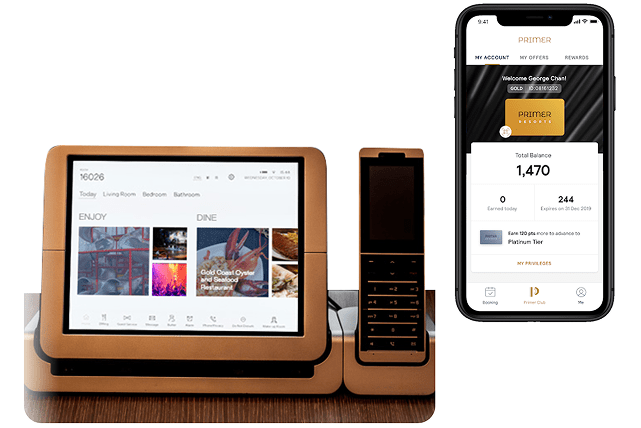
Our next app helped our client improve their guest experience by replacing printed marketing materials and the need for phone calls with a smart solution. Now, guests can easily order in-room dining, make reservations, and interact with staff— through a simple tablet in their room. The solution includes three parts: a custom in-room tablet with a variety of services, an admin panel for hotel staff and service providers, and a backend system that connects everything together. This approach makes things easier for guests and staff, improving both convenience and efficiency.

Existing Customers First: Building Loyalty with Personalized Touchpoints

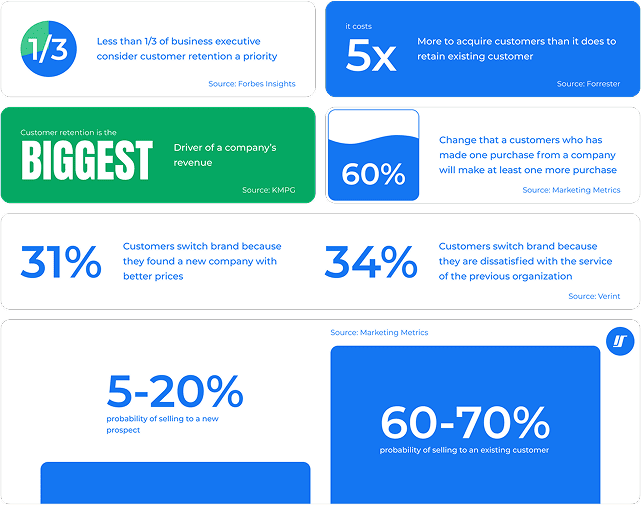
Keeping existing customers is not just a strategy; it’s well-known that retaining existing customers is more cost-effective than acquiring new ones. In fact, research shows that it costs five times more to acquire a new customer than to retain an existing one. KPMG named customer retention as the number one revenue driver for the company.

Moreover, a 5% increase in customer retention can lead to a 25% to 95% increase in profits, showing the significant impact loyal customers can have on a business’s bottom line. Retention strategies, like personalized experiences and loyalty programs, can foster long-term relationships and generate recurring revenue, ultimately making them an invaluable part of any business model.

Personalization: How Technology Can Help?

Everyone loves to feel special—it’s part of being human. In hospitality, personalization has evolved from being a luxury to an essential standard. With the right technology to manage your data effectively, you can deliver those “wow” moments that guests won’t forget.

More than half of hotel chains are already using personalization features on their websites, booking platforms, and apps, and another 39% are planning to follow suit soon. They’re tailoring experiences to fit guest preferences perfectly.

Source: Deloitte

How does technology make it happen?

  • CRM Systems: They help you keep track of guest preferences, booking history, and special requests so you can offer services tailored just for them.
  • Loyalty Programs: Personalized rewards and offers show your guests that you value them, keeping them coming back for more.
  • AI Personalization: AI analyzes guest data to predict what they’ll love (from room upgrades to local recommendations) before they even ask.
  • IoT Gadgets: Smart room features like voice-activated assistants, or temperature controls adjust to your guests’ preferences, making their stay more comfortable.

With tech-powered personalization, you’re building loyalty and maximizing the lifetime value of every customer.

Our Case Study: Smart Hotel Management & Loyalty Program

For one of our clients, we created a smart room solution, complete with a custom IoT system. Guests can use a mobile app to control services, explore amenities, and find resort information– with a special touch to their suite type. For the client’s entertainment business, we improved their legacy software by running a full IT and code check, fixing issues, and making the system better for customers.

Along with that, we developed a mobile app for the loyalty program, allowing businesses to effortlessly reward their customers and keep them engaged with exclusive benefits.

Our solutions not only helped the client with special experiences for guests; it also improved operations, cutting costs by eliminating inefficiencies. Here’s what our experts shared:

“We transitioned away from ESB (Enterprise Service Bus) systems, which previously cost millions, and replaced them with more efficient, self-managed solutions. Similarly, we’ve implemented Device Farms that improved operations and saved resources.”

Leveraging Software to Increase Upsell Opportunities

Here are some examples of tech tactics that will help your team sell more and introduce new offerings to existing customers, improve overall efficiency leaving your team grateful:

Dynamic Pricing Algorithms

For finance and marketing teams, manually calculating pricing by segment to introduce your clients can be incredibly challenging. AI-powered tools can strongly optimize these strategies by analyzing your database in detail.

Upselling via Apps

Boosting revenue in the hospitality business often comes down to personalized experiences. Imagine this: a guest books a room, and then your app suggests a spa package or a room upgrade at just the right moment. Later, it nudges them to book a dinner reservation or a guided tour designed to their preferences. With apps offering these personalized recommendations during and after bookings, you’re not just increasing your revenue per guest but also skyrocketing their experience. And you do it in a sustainable way, not by speculating, but by offering what your customers desire based on their previous experiences. It’s a win-win: seamless, helpful, and far from pushy.

Inventory and Resource Management Software

Making every resource count in your hospitality business is key. Inventory and resource management software allows you to effortlessly track everything from linens to room availability, ensuring nothing goes to waste. Having real-time insights to reduce overstock, avoid shortages, and optimize operations assists sustainably keep everything under control and know what you need to focus more. It helps maximize room occupancy by aligning bookings with available resources, ensuring every room and item is used effectively. This approach leads to smarter management, better guest experiences, and a noticeable boost to your bottom line.

Adopting these strategies not only optimizes your operations but also drives business growth. Ready to discover how technology can elevate your goals? We’re here to create a tailored solution for you.

Steps For Implementing a Customer Service Technology Solution

Improving customer service in hospitality doesn’t have to be a daunting task. With the right technology, you can smooth the path of your operations, speed up response times, and elevate the overall guest experience. Here’s where you can make it happen:

1. Understand Your Needs

Start by identifying the challenges your business is facing. Are you struggling to manage high volumes of inquiries, track customer feedback, or personalize the guest experience? Pinpointing your needs will guide you to the best solutions.

2. Pick the Right Tools

Choose technology that aligns with your goals. Look for solutions that are scalable, easy to use, and integrate effortlessly with your current systems. Options like CRM software, live chat tools, or a guest experience app can make a difference.

3. Equip Your Team

Technology is only as effective as the people using it. Train your staff to make the most of the new tools, so they can deliver exceptional service and resolve issues quickly. Confident, well-equipped staff creates happy, loyal customers.

4. Keep Improving

Once implemented, monitor how well the solution works. Are response times improving? Are customers more satisfied? Regular evaluations will help you fine-tune your approach and keep things running harmoniously.

Some Tech Ideas for Hospitality Businesses

  • CRM Software: Manage customer interactions and preferences.
  • Guest Experience Apps: Delight guests with personalized experiences right at their fingertips.
  • Amenity Management Systems: Simplify operations for everything from room service to facility bookings.
  • Helpdesk Software: Resolve customer issues optimally.
  • Live Chat Tools: Offer instant support and answers.
  • Social Media Management Tools: Keep customer interactions engaging and organized.

Integrating these strategies will not only improve your customer service but also deliver unforgettable customer satisfaction, loyalty, and, ultimately, your bottom line. Ready to take the next step? Book a consultation with our experts.

Conclusion

To wrap up everything we’ve discussed, customer satisfaction and experience are at the heart of hospitality. Retaining customers is more than just keeping them around—building strong, long-lasting relationships and consistently meeting their evolving needs. By understanding their pain points and offering personalized solutions, you can inspire loyalty and drive progress. With the right technology and continuous improvement, your business can stay ahead, let go of what no longer serves you, and keep growing.

At Intellectsoft, with over 17 years of experience in software development, our expert team is ready to help. We create everything from mobile apps to full-fledged portals and systems, leveraging the latest technologies like AI, Cloud, and Machine Learning. With deep experience in the hospitality industry, we’re here to craft personalized solutions that bring your business unforgettable customer experience and retain your valuable clients.

Ready to double your revenue and level up your customer retention strategy with personalized technology? Contact our experts, and we look forward to working hand in hand with you to build or revitalize the perfect app or system for you.

author

Tetiana Borysova

Content Writer


Source link
rbtechfs

All Categories
  • Trends
RECENT BLOG
  • Top 10 Fintech Software Development Companies

    Comments Off on Top 10 Fintech Software Development Companies

  • Why It Is Important To Ensure Data Protection

    Comments Off on Why It Is Important To Ensure Data Protection

  • Selecting The Right IT Governance Framework

    Comments Off on Selecting The Right IT Governance Framework

  • Many U.S. Enterprise AI Projects Fail at the Proof Stage — How Our LATAM Engineers Close the Gap

    Comments Off on Many U.S. Enterprise AI Projects Fail at the Proof Stage — How Our LATAM Engineers Close the Gap

image
image
image
image
image
Updated_RBTFS-Logo
  • Home
  • Who are we
  • What do we do
  • Blog
  • Contact Us
  • Home
    • Home 1
    • Home 2
    • Home 3
  • About
    • About Us 01
    • About Us 02
  • Projects
    • Projects
  • Blog
    • Blog Grid
    • Blog List
  • Pages
    • Contact
    • Team Members
    • Testimonials
    • Our Services

Copyright by rbtechfs.com 2024. Designed by P1 Marketing All Rights Reserved