








The US is on the verge of a catastrophic health care emergency. By 2032, the nation is predicted to lack between 46,900 and 121,900 physicians, with the shortage not only limited to primary care but also affecting specialized medicine. Telemedicine is a pragmatic approach to the perplexing issue of limited access to care, as healthcare practitioners can reach those who are most in need and provide the care most necessary.
The telemedicine app development market shifts the paradigm of navigating and receiving healthcare. These platforms lift geographical restrictions on remote care and reduce waiting times. They allow patients to self-refer (especially those living in rural and remote areas) for health care consultations from the comfort of their own homes, without the need to physically visit a health care provider.
There’s much more to telemedicine than meets the eye. We will discuss the major benefits of digital transformation in healthcare and explain how to develop a telemedicine app.
What is Telehealth Software
Back in the 1940s, telemedicine technology emerged in its current form. The first successful transmission of a radiological image over a telephone wire occurred in 1948. This is the first form of telemedicine. Many medical experts and practitioners promptly adopted it for its ease of communication and rapid transfer of patient information.
Today, telemedicine is an umbrella term that encompasses various digital, web-based, and other proprietary technologies that enable and facilitate communication and interaction between patients and healthcare providers. Communication can range from phone calls and video conferences to remote desktop sharing and text messaging. Thanks to IoT in healthcare industry, hospitals can monitor patients remotely, bringing healthcare even to the most remote areas, to homes located in hard-to-access places. Medicine is evolving, and so are people’s needs, which telemedicine strives to satisfy.
Market Overview
In 2024, the telehealth industry was valued at over $161 billion. Researchers predicted that the number would grow to $186 billion in 2025 and $79 billion by 2032. The market is expanding at a 22.9% CAGR during the analyzed period. North America accounted for the largest share of market cap in 2024, at 45.76%.
There are many reasons to explain this rapid growth of the telemedicine app development market. Healthcare professionals have become increasingly aware of the importance of chronic disease monitoring and management, thereby driving a consistent and growing need for remote healthcare. The anticipated direction of future trends in telemedicine app development will primarily focus on providing hospitals with technological infrastructure for remote healthcare services.
Moreover, the provider shortage in rural and underserved communities has spurred a growing adoption of telehealth to expand access to specialty care. Several healthcare systems were forced to implement some level of telemedicine to reduce physical interaction in the wake of the coronavirus pandemic.
Types of Telemedicine Applications
Let’s shortly review the most widely adopted telehealth applications in modern medicine.
Tele-ICU
Tele-ICU is an advanced practice of telemedicine in which critical care physicians monitor patient care in remote locations. Tele-ICU is a web-enabled service implemented via a hybrid model that uses bedside cameras, EMRs, and monitors. Physicians receive a comprehensive mobility system and electronic mobile devices that enable real-time patient monitoring and health interventions. Critical care physicians can also monitor patients in real time using headsets and, together with nursing, make necessary changes.
Surgical Telemedicine
Surgical telemedicine is an emerging niche field in medicine, with the da Vinci Surgical System leading ahead. These operating consoles are engineered to enable the surgeon to work with the finest details in a minimally invasive manner, even when the surgeon and the patient are not in the same room or even the same hospital. Telehealth app development providers need to ensure superior surgical precision, 3D and HD satellite imaging, visualization, tremor filtration, and hand-shake suppression capabilities.
Telerehabilitation
Telerehabilitation services aim to help individuals who need physical, occupational, or speech therapy at home receive supervision for therapy sessions from home. These translate into early intervention, chronic disease monitoring, and care for patients in the post-acute phase of the disease, with a lower likelihood of re-hospitalization, which reduces the cost of care and overall healthcare spending. Telemedicine app development in this niche incorporates motion tracking, exercise games, biometric real-time monitoring, and other technologies for therapy and patient safety.
Teleoncology
Teleoncology platforms lessen the burden of physical consultations. For clinicians, advanced teleoncology systems and e-health record systems enable seamless, streamlined record-sharing and imaging, as well as telecollaborative work for diagnosis and imaging within the employed system.
Virtual Second Opinions
Virtual second-opinion platforms ensure timely, structured consultations with expert case reviews. Patients may ask medical questions and upload images of their medical records and history via a secure portal, and the specialist must reply within the specified deadline.
Telepsychiatry
Telepsychiatry is the use of telemedicine for psychiatrists to provide psychiatric services through videoconferencing. It covers almost all challenges of traditional psychiatric practice. Mental healthcare appointments can be scheduled and conducted from remote geographical locations. It includes assessments and videos on managing medications and managing mental healthcare crises. Some of the best apps for mental health are helping combat the specialist shortage crisis—a pressing issue in modern healthcare.
Teleradiologists
Telemedicine app development for radiologists plays a vital role in diagnostic assistance. They can read and analyze medical images from any location and address the urgent need for on-call consultative specialists. Remote interpretation of images transmits diagnostic images over computer networks at any time of day or night and uses computer-assisted diagnostic programs that analyze images from CT, MRI, and ultrasound scanners.
Remote Patient Monitoring Platforms
By pulling data from connected medical devices and digital health platforms outside the healthcare provider, the solution tracks patients’ vital signs, symptoms, and medication adherence. These kinds of technology, early intervention, chronic illness care, and post-acute care, decrease the rate of hospital readmissions and overall health care costs.
Teledermatology
Addressing the shortage of dermatologists and the lack of expertise, skin care support has risen to the services of teledermatologists. They assess skin conditions and other related issues using high-resolution imaging and sophisticated dermoscopes integrated with diagnostic technologies. Teledermatology sits on tele-imaging technology foundations, which comprises devices that photograph the skin by illuminating and magnifying it to meet the parameters. Other platforms include dermoscopic imaging devices to assess skin anatomy and improve diagnosis and treatment.
Telepathology
The ability to examine and interpret tissue specimens and provide diagnostic consultations using high-power microscopy has changed pathologists’ workflows. Digital pathology systems use whole-slide imaging technology that surpasses the capabilities of traditional microscopy. Pathologists using the tools provided can analyze very complex specimens and draw measurable, annotative conclusions using specially configured pathologist software that offers high zoom and other advanced features.
Teleophthalmology
Teleophthalmology includes advanced imaging, diagnostic glaucoma testing, retinal screening, and even complete ophthalmologic exams. This specialty is supported by technological means, including fundus cameras, optical coherence tomography imaging systems, and automatic visual field testing devices, which require standard training for techs under tele-ophthalmology supervision. Each system retrieves and analyzes large volumes of images and other metrics to produce a fully remote eye exam that does not require a live specialist.
Telecardiology
Advanced telemedicine systems for telecardiology facilitate integrated delivery of cardiovascular care, including ECG and echocardiogram interpretation, rhythm monitoring, and cardiology consultations. These systems also address the urgent need for remote cardiovascular care by enabling continuous patient management for patients with cardiovascular illnesses.
Teledentistry
Teledentistry is changing the way dentists deliver care by enabling patient consultations, oral preventive care, and the evaluation of dental treatment outcomes using intraoral video cameras and other advanced devices. These teledentistry devices and tools are integrated with computerized patient files and documentation, as well as treatment procedures.
Telenephrology
Tele nephrology is the application of novel telemedicine techniques to the care of kidneys, aiming to bridge the ever-widening gap in nephrology care. It ensures better access to specialized renal care for patients with renal ailments who may lack these services. This approach to telemedicine includes remote CKD consultations, remote CKD dialysis, and pre-transplant evaluations and support, all done via secure video and e-health platforms.
Teleneurology
Teleneurology involves providing neurological care at a distance, thereby meeting a critical need for neurological evaluation, particularly in emergency situations such as stroke assessment. This domain of telemedicine addresses acute stroke conditions, manages epilepsy, assesses movement disorders, and reviews follow-up patients with chronic neurological illnesses.
Advantages of Mobile Health Applications
Telehealth benefits solve some of the oldest pain points in healthcare and open the door to new avenues of tailored service delivery. Our telemedicine app development guide categorizes benefits based on the end user of the app.
Benefits for patients include:
- Direct contact with physicians. Patient and physician communication is now possible thanks to secure messaging features.
- No need to travel. Patients no longer need to waste time going to medical centers as they can now consult doctors online.
- Lower costs. Online consultations cost less than face-to-face consultations.
- Works on all devices. You can install the app on all your devices: mobile phones, tablets, and computers. You can download it seamlessly and use it to its full potential.
Benefits for healthcare providers include:
- Improved collaboration across medical specialties. Health providers can consult and discuss complex patient cases and their treatment with colleagues from different countries.
- Continuous patient contact and monitoring. Physicians are able to follow up with patients who are home recovering and patients who are recently discharged from medical facilities.
- Expanded practitioner. Digital technology lets practitioners oversee a given number of appointments simultaneously.
- System compatibility. Telemedicine practitioners’ apps, like Electronic Health Records (EHRs), are folding in other clinical systems of record to streamline gaps in workflow. Healthcare CRM software development plays an important role in how hospitals use EHRs.
- Lowered appointment gaps. Remote consultations help lower the frequency of appointments that are cancelled or missed.
Top 3 Successful Apps in Telehealth
When you decide to build a telemedicine app, look at successful cases. Market examples can reveal critical features that help shape the future design, functions, and approaches to enhance their usability.
- Teladoc Health. This is a one-stop service solution that meets the diverse health care requirements of patients, giving them a great user experience. The platform has gained trust from patients, healthcare systems, and insurance providers in its certification for practitioners, quality control, assurance, and outcome measurement parameters.
- Amwell. Amwell offers a comprehensive telehealth subsystem for patients and telehealth-centric healthcare delivery systems. Ease of use, clinical quality, and incorporation within current healthcare systems are central tenets of the platform. Amwell’s success stems from the flexible, adjustable design for deployment to various healthcare delivery models like independent practitioners and multi-facility healthcare systems.
- MDLive. MDLive aims to fill critical gaps in the healthcare system by providing instant access to primary healthcare services through an online platform. This platform, created for healthcare on the go, is intended for both the public and for use in employer-sponsored health programs. MDLive is popular with users for the streamlined application healthcare system, which reduces the chances of facing barriers for underserved casual healthcare needs and traditionally cumbersome healthcare visits.
The Digital Transformation of Healthcare Through Telemedicine
Novel telemedicine systems enable healthcare providers to expand their scope of practice, improve patient care, and streamline diagnostic processes. Familiarity with digital transformation through telemedicine can arm healthcare managers with proactive thinking and system Learning.
Communication through video, messages, and other forms of messaging enhances contact with patients with diverse clinical and suitability needs. Plus, diagnosis, decision-making, and treatment tailoring can all be automated using artificial intelligence. Using AI in the healthcare industry helps uncover patients’ data, identify potential health risks, and recommend healthcare options through a virtual Monte Carlo decision process. With all of the insights, providers can use this data to enhance the personal approach to patient care.
How to Develop a Telemedicine App
The following section briefly describes the processes of telehealth app development.
Phase 1: Portfolio and Commercial Assessment
A robust primary market and user segmentation should support effective app development for healthcare. The target group in this case is the participants of the healthcare system, i.e., patients and doctors. Next, identify the most pressing user demands that competitors couldn’t deliver. Conduct market analysis with a strategic focus on market value and competition.
Phase 2: Defining the Scope of the App
Set the basis of your vision of a telemedicine platform. Feature prioritization clarifies the development roadmap and ensures efficient resource allocation based on value. This focus almost always leads to the discovery of redundant functions or features that are not worth investing in.
Also, you may want to consider how niche regional legal requirements will affect your app specifications (encryption, audits, user monitoring, data collection, etc.) and the specific security measures required. In order not to violate any rules while you develop a telemedicine app, you need a lawyer and a healthcare software specialist.
Phase 3: Selecting Development Approach
Set the project’s boundaries and define the appropriate software development method (Scrum or Kanban). Agile methods, in particular, are beneficial for complex healthcare applications that require multi-phase development. Define the deadlines to be met with project milestones as well as the project KPIs to control the timeframe and ensure smooth movement. At this stage, it is vital to take your time with software development team building and select the experts with the necessary experience.
Phase 4: Building Prototype and User Interface
A telemedicine app’s MVP provides a sense of the product’s look and the fundamental mechanics of its use. In addition to the telehealth MVP expectation, it helps marketers and internal users gauge the value behind the principal characteristics of their telehealth app. It helps avoid wasting resources on the complete version of the product if it is useless. It focuses on rapid development because it is cheap and can integrate and adapt to changes based on test-defined feedback.
Phase 5: Ensuring the Full Functionality
This engineering phase produces working software for developers, who need to review it. This is a clear indication that each telehealth app requires significant time to develop, as the remaining features will dictate how complex and how many interrelationships there will be among the technologies in the telehealth app, in addition to their operational requirements. Furthermore, all telehealth versions must be successfully tested by telehealth application users.
Developing a Telemedicine App: Key Obstacles and Practical Solutions
Like any project, telehealth app development has its challenges. Let’s list the most common of those and figure out ways to eliminate them.
Integration With the Healthcare System
Keeping pace with the current IT trends in healthcare industry is challenging. Integrating telemedicine solutions into the current healthcare IT infrastructure built on electronic health records (EHRs) is a daunting task without the required talent on board. Integrated workflows between telemedicine solutions and traditional healthcare organizations are essential to provide holistic, integrated patient care.
Here’s how to create telemedicine platform that integrates easily:
- Include interoperability requirements in the design architecture.
- Use standard data communication protocols and data sets to ensure broad cross-platform EHR interoperability.
- Directly engage with healthcare institutions to clarify their business operations and design suitable technical systems for them.
User Adoption and User Interaction
The system should be designed so that the presentation is logically separated from the data, and it uses a layered design that also facilitates ease of use. This could become an obstacle when you are trying to address multiple clusters of users – those who are not digitally savvy, for one, and those who are physically challenged, for another.
Here’s how you can accomplish that in your telemedicine app development process:
- Carry out usability tests to chaeck the capabilities of your systems and how effectively it functions.
- Ensure the interface is simplified and logical.
- Add features such as voice recognition and screen readers for those with varying disabilities.
Internet Connectivity and Technology Barriers
A stable internet connection is a prerequisite for using telemedicine systems, which are often unavailable in remote locations. In addition, users may be using low-tech devices, which may mean they cannot use the app effectively.
Here’s how to make a telemedicine app
- Enhance capabilities that function normally in low connectivity environments.
- Enable core features to function without internet access.
- Ensure flawless cross-device functionality.
Overcoming Language Barriers
In the realm of telemedicine, proficient services may not be attainable to users of various languages. This could impact patient-provider communication and patient understanding for those receiving telehealth services.
Here’s how to get around this problem:
- Integrate a multilingual translation solution for seamless user-to-user communication.
The Privacy and Security of Telemedicine Applications
The swift rise of telehealth app development has made safeguarding patient data confidential of the utmost importance. A breach of the security boundaries of any telemedicine system could lead to devastating consequences, including cyber attacks on data warehouse healthcare industry and expose patients to harm.
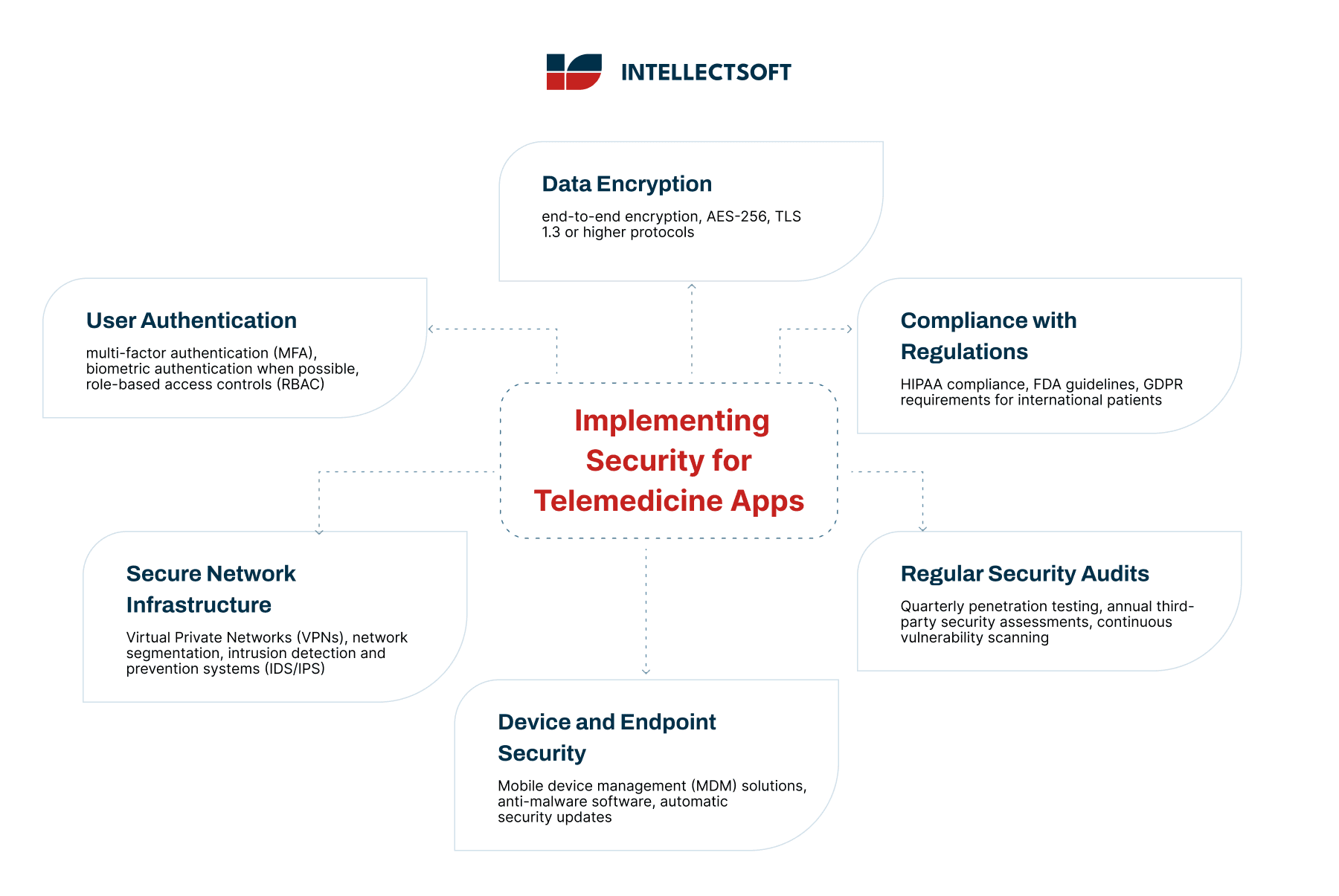
Best Practices in Implementing Security for Telemedicine Systems
The following telehealth app safety benchmarks are vital for protecting patients, the app, available data, and surrounding interaction systems.
Core Technologies and Functions for Telehealth App Development
The core technologies and functions of telehealth app development ensure that the platform meets standards, balances user, provider, and patient satisfaction, and offers additional value-added services.
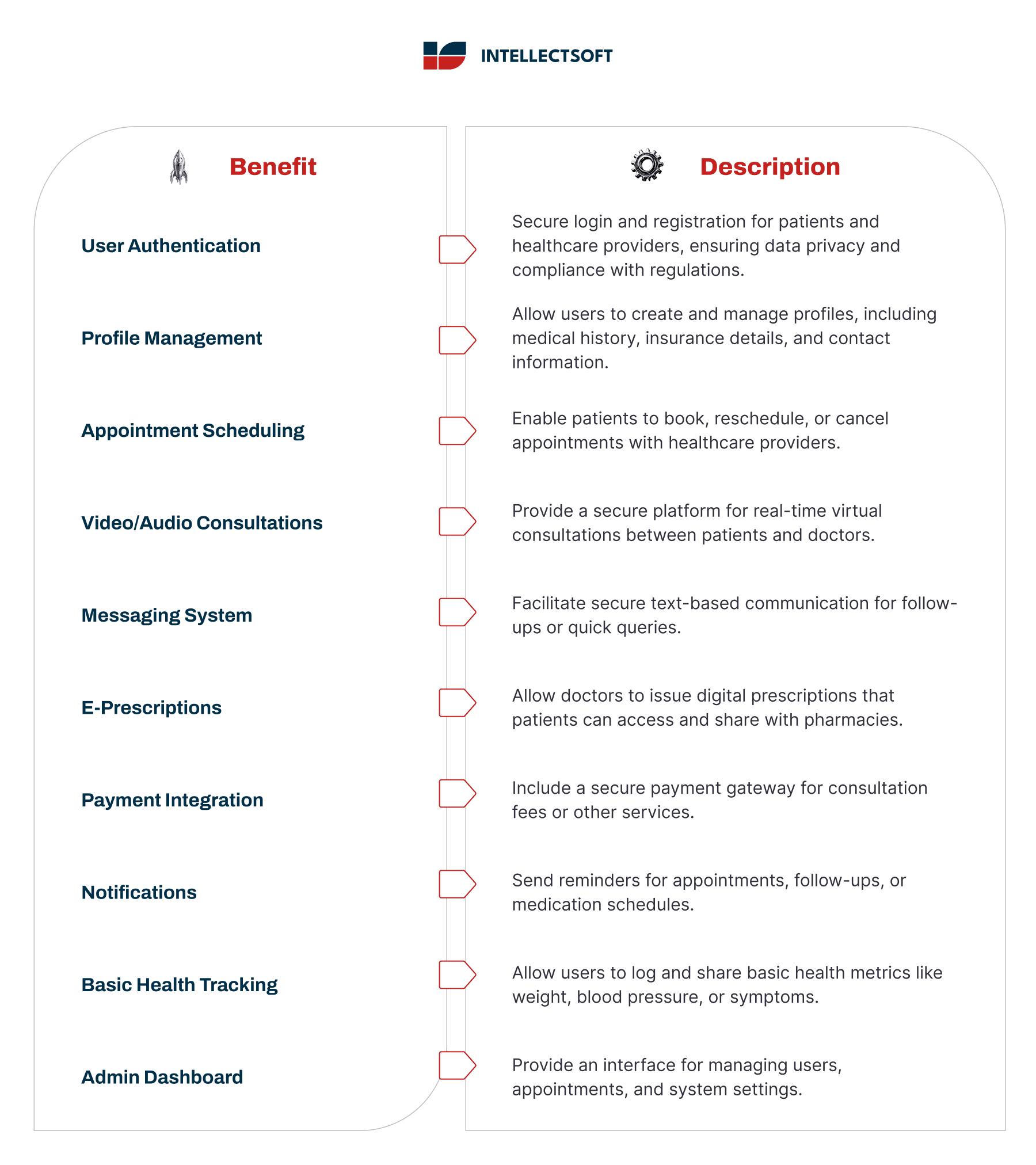
MVP Feature Set
Having a strong foundation of core features is necessary for user acquisition, which in turn improves market penetration.
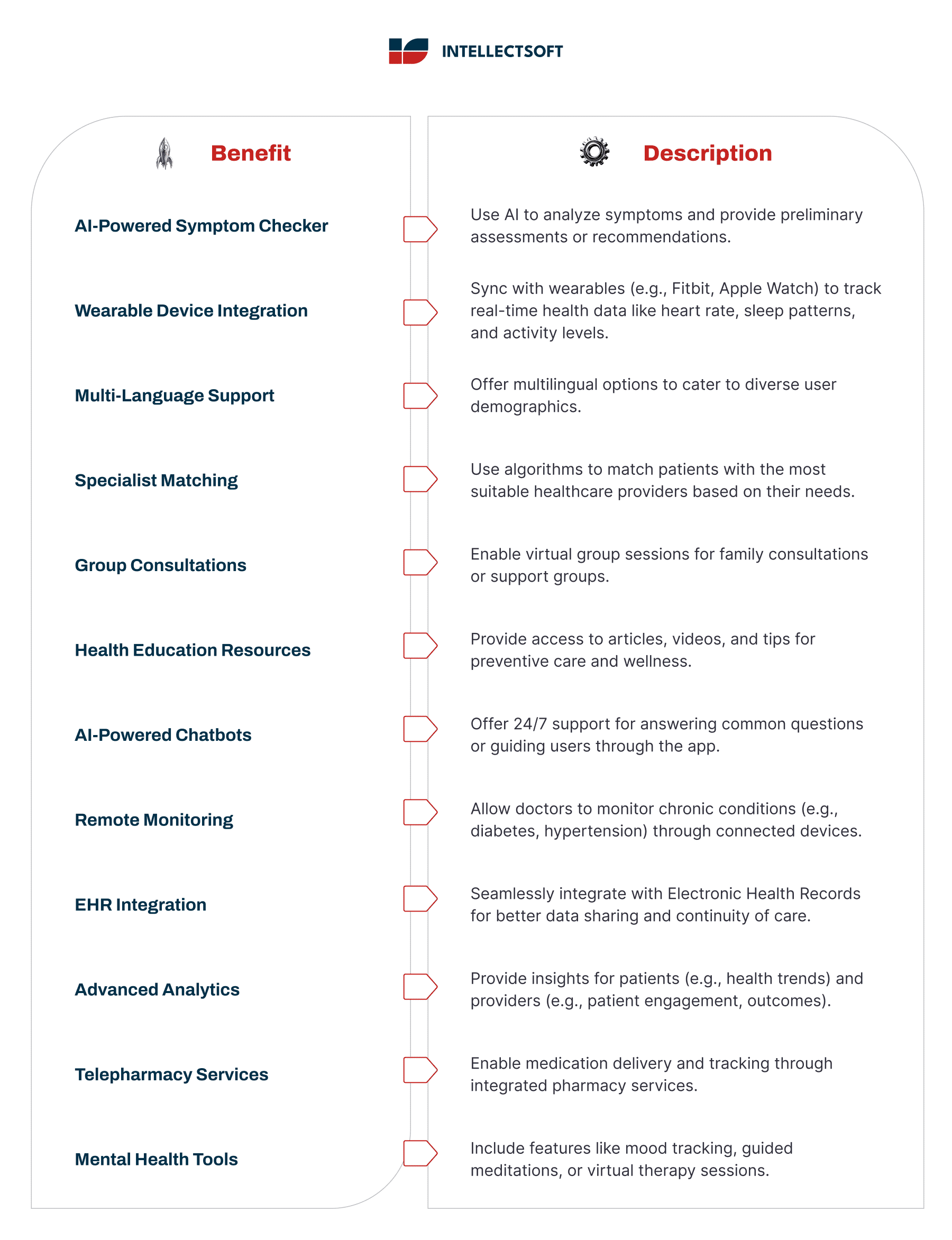
Advanced Feature Set
The first step in market expansion is to differentiate telehealth services after achieving the Minimum Viable Product (MVP) functionality.
A Step-by-Step Guide to Telemedicine App Development with Intellectsoft
Wondering how to choose a custom software development company? Intellectsoft has integrated best practices for telehealth app development, modern methodologies, and the best tech stack, with a focus on business value. Check out how the process looks when you work with us.
Step 1. Developing Objectives and Technical Details of the Project
This sets the course of every step that follows. We conduct in-depth market research to identify pain points in service delivery within the healthcare system. This helps us figure out the gaps where your telemedicine app can deliver targeted value.
To create an MVP, we analyze
- the intended performance of the application
- anticipated levels of scalability and growth
- the ability to integrate with other healthcare software systems.
These aspects will be documented, as they will dictate all future design and development decisions, including the telemedicine app development timeline.
Step 2. Insuring Coherence with Regulatory Measures
To ensure compliance with HIPAA regulations, we ensure that your healthcare app incorporates the following:
- ePHI and other functionalities, such as being able to track and record ePHI being sent, accessed, stored, and even in the system
- access controls, audit logs, and procedures such as breach notifications
- user identification procedures and maintenance of logs.
Step 3: Determining the Appropriate Technology
The choice of technology has direct consequences for audience size, application speed, and telemedicine app expenses.
iOS versus Android
iOS users are highly engaged with the app and eager to pay for it. Nevertheless, Android demand still dominates the market, especially in developing nations, and the rise in telemedicine is undeniable.
Native versus Web Solutions
Often, providers need a desktop to properly manage and document patient care in the system. Native desktop applications do perform better and offer the added benefit of offline operation, but they require separate development for each operating system. Web-based, on the other hand, works faster and is easier to update and maintain, but does have some challenges in using proprietary device functionalities.
Cost Analysis: SaaS Vs. Custom Development
Software as a Service (SaaS) solutions offer benefits such as reduced time and money spent on development and lower costs associated with initial development and delivery. However, it requires the organization to enter into a long-term agreement with the service provider and offers inflexible customization options. Custom-developed solutions give more control over data, but there’s also the concern of higher development and maintenance costs.
Step 4: Designing the Application and UX
To be successful, the telemedicine app will need a simple user experience. This is critical , since an overly complicated system within the app can be more damaging than anything else, as it will irritate users.
- UX Design: Study the market and users’ reviews of competitors’ platforms to gain qualitative insights into what makes the best UX.
- UI design: The balance between simplicity and professionalism can be achieved by reducing the time required to learn the interface and focusing on simplicity.
Step 5: Incorporating a Minimum Viable Telemedicine Offering
Video consultations are the hallmark of telemedicine. You should enable support for high-definition streaming video, with automatic quality detection and adaptation to network conditions. When appropriate and to the extent allowed under local laws, incorporate screen-sharing, file-sharing, and streaming-recording options.
Step 6: Implementing Robust Compliance and Security Technologies
The boundaries of compliance are the lower limits to which any organization can target. Beyond compliance, a healthcare institution should implement a comprehensive patient data protection strategy to prevent data breaches and maintain the integrity of its systems. The telemedicine services system needs to allocate a substantial investment in protection through compliance expenses to ensure the sustainability of the device.
Step 7: Choosing APIs to Add Features
Select reputable API providers for your telemedicine app development. Some of the leading APIs in the industry are:
- VSee SDK’s video conferencing is HIPAA-compliant and includes additional healthcare features such as screen sharing, document transfers, and virtual rooms for multiple users.
- VIDYO is an enterprise-level telemedicine system with healthcare-focused functions. It has excellent video streaming quality, an expandable system, and top security.
- WebRTC has customizable options and open-source project communications that can be tailored to specific healthcare needs in real time.
- OpenTok has and continues to add video communication, a Reactive API, and healthcare-specific protective features.
- Twilio has video communications, voice, messaging, authentication, and other communication APIs. The platform also has a compliant infrastructure.
- Acuity also offers automated features such as scheduling, payment processing, and calendar sync.
Step 8: Develop a Prototype for Testing
Prototyping allows you to verify ideas, workflows, and potential pitfalls of your design, saving you time and money while you’re still at the stage of full-blown development. Customize features such as scheduling appointments, video calls, or patient records for a user’s mobile or tablet. Before building out the application, try to fix as much wonky functionality and user experience as you can, at a minimum, for the health system and patient users.
Step 9: Obtain the Necessary Approvals and Certifications
Every healthcare regulation and standard in place is there so that every patient gets the best possible service to help them with whatever needs adjusting. For instance, certain elements involving medical decision support and device integration may require certain approvals, especially from the FDA. To develop a telehealth app
Step 10. Deploy and Maintain Your App
The release of the telemedicine app is its go-live date. You need to put in place monitoring systems that can organize and track application use and dictate engagements with targeted users. Establish rules for users to resolve technical and security issues within a specified timeframe. The application changes must not compromise security when addressing the issues, add value, and not make the healthcare regulations obsolete.
Wondering how much does it cost to develop a mobile app or how long does it take to make an app? You may find all the answers in our FAQs section.
White Label Telemedicine Solutions
Healthcare organizations, small businesses, and even startups can white-label telemedicine solutions and rebrand them as their own products. These solutions are pre-built and allow businesses to save time, money, and resources on telemedicine app development.
Most of the white label telemedicine apps/services come with the following core features:
- Customization: The platform can be customized to reflect the user’s brand identity – logos, color themes, and other relevant user-specific elements.
- Patient and healthcare provider portal users: Separate patient and healthcare provider portals with appropriate functionality for each user type.
- Virtual consultation: Physicians and patients can consult in real time via audio and video.
- Appointment management: Patient appointment scheduling software should enable patients to book, cancel, and reschedule visits, and even an integrated with the user’s calendar.
- Digital prescription generation: Facilitated capability for doctors to send prescriptions electronically to their patients and directly to pharmacies.
- Integration with the patient’s EHR: Simplified workflows that allow healthcare professionals to retrieve the patient’s medical history and are integrated with other EHR systems.
- Transaction processing: Account functionalities that enable patients to pay through the platform.
Business Model Canvas for a Telemedicine App
As we already stated, in our approach, we focus on both the technical and the business side. So, we present to you a business model canvas for a telemedicine app development.

How much does it cost to develop a telehealth app?
A simple telemedicine app is usually a Minimum Viable Product (MVP) and can be developed for $60,000 to $120,000+. This release usually includes basic functionality (e.g., patient and doctor user profiles, search and scheduling, text chat, and one-on-one video consultations). It’s a great way to really start getting a sense of the users and market demand. An advanced app design cost will naturally rise as more enhanced features are developed. A sophisticated solution could be developed for $120,000 to $250,000+.
Building and developing a telemedicine app can cost vary depending on the complexity, functionality, and technology stack. A simple app with limited functionality will cost less than a complex, multifunctional platform.
A small-scale telemedicine app (some would call MVP) could be developed for $60,000 to $120,000+.
How to build a telemedicine app?
To start with telemedicine app development, focus on the following steps:
– Specify the requirements: Collect and interpret the functional and technical qualities;
– Design: Create the range of the product, the user interface and experience, and the activity flows;
– Select the appropriate technologies: Configure the healthcare-associated programming languages, frameworks, and cloud infrastructure;
– Building the product: Construct the interfaces, server systems, and the systems;
– Introduce the app: Submit the application to the App Stores and integrate Web Platforms.
What are the critical features of a telemedicine application that are key to its success?
The critical features of a telemedicine application ensure the ability to balance and integrate functionality and security with the user experience interface. The most vital of those is video conferencing between patients and the healthcare providers. Also, it should encompass booking medical appointments, which helps patients a lot to schedule.
How long does it take to develop a telemedicine app?
A telemedicine app development timeline depends on its complexity and the resources allocated to development. A staged approach is typical, beginning with discovery and design, then proceeding to development, testing, and delivery.
Building out a simple MVP with core features such as video calls and scheduling usually takes three to six months. Custom EHR integrations, developing custom e-prescription modules, or building for more platforms (iOS, Android, and web) can add an additional 3 to 6 months. More complex solutions for enterprises with advanced AI and IoT integrations, and complex security compliance requirements might take 9+ months to implement.
How do you customize solutions to meet the clients’ specific needs?
Custom solutions all depend on their core purpose. For instance, cardiology apps track heart rate via smartwatches, and dermatology apps provide preliminary mole analysis with high-resolution imaging and AI. Custom software is tailored to the specific clinical workflows of that specialty.
Large and complex hospital systems have complex needs when it comes to modifications. Customizations will need to cover multiple EHRs and billing software to create a scalable solution. This will need to span multiple departments to develop a comprehensive solution for enterprise security and compliance requirements. Solutions could include varying levels of departmental communication and hospital-specific administrative analytics.

Source link