








We have witnessed Latin America emerge as a nearshore software development center, offering highly skilled professionals at attractive prices. Software development in Latin America is expected to grow at a 7.55% CAGR over the current decade, while the global average is 3.3% over the same period. This has been attributed to robust government investment in technology education, improved digital infrastructure, and a strong culture of technology.
With IT revenue set to reach $74.5 billion by 2029, the region is experiencing rapid growth. For companies trying to enhance their development without the hassles of offshore outsourcing, South America software development offers a perfect blend of close geography and highly skilled engineers. The region boasts 2.75 million IT professionals, with Brazil, Mexico, Argentina, Colombia, and Chile ranking among the top exporters, powered by robust, world-class universities such as Tecnológico de Monterrey, University of São Paulo, and University of Buenos Aires, and significant STEM investment.
Amazon, Intel, Microsoft, Netflix, and countless other global companies maintain a strong presence in Latin America. This just confirms again that Latin America has a huge talent pool waiting for businesses willing to tap into it.
In this article, we’ll unveil the top reasons to work with South American software developers and the popular nearshore destinations to find IT professionals.
What is the Nearshore Outsourcing Model?
Nearshore software development involves outsourcing software development and related activities to countries within the company’s geographic proximity. The model unites the cost benefits of outsourcing with the operational advantages of working during compatible business hours.
Outsourcing software development to South America is perfect for neighboring companies in the United States. They are close geographically, with easy movement, and are in the same time zones. The development costs are also significantly lower compared to other countries.
Nearshore Software Development in Latin America
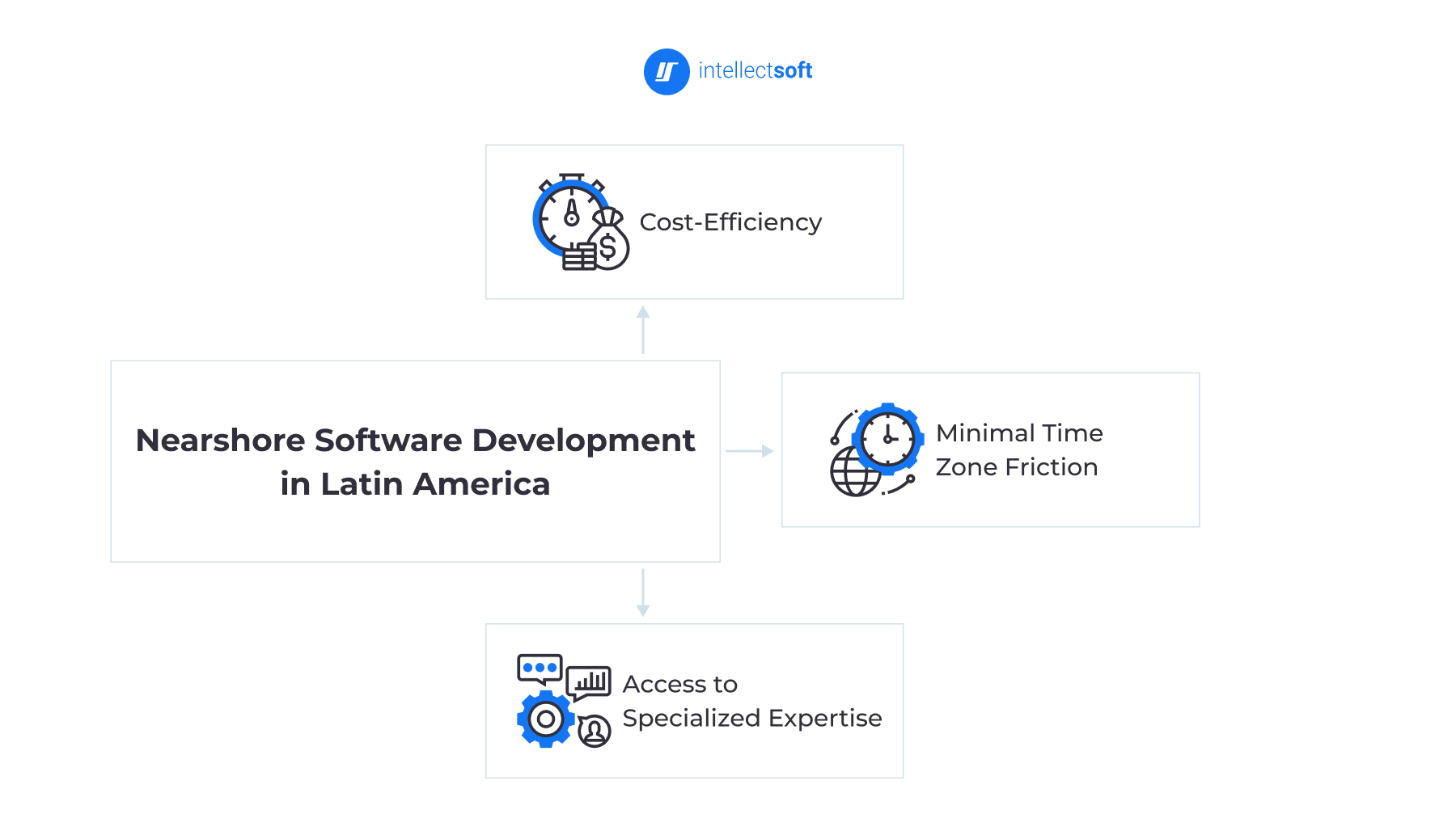
Cost-Efficiency
South America software development stands out because it delivers high-quality work at prices 40-60% lower than what North American developers charge. The annual compensation for senior developers in this region ranges from $45,600 to $66,000, whereas their US counterparts receive between $114,000 and $132,000 for equivalent positions.
The cost savings from software development in this case include lower personnel expenses, reduced operational costs, and simplified project management.
Minimal Time Zone Friction
One of the many benefits of outsourcing software development to Latin America is its strategic location. The close location between these regions allows nearshore software development teams to
- work together face-to-face during their shared business hours
- handle urgent problems and fix bugs right away
- work together without any issues because of their shared time zone
- avoid delays in project completion.
Access to Specialized Expertise
The software development South America offers demonstrates exceptional proficiency in multiple high-demand technical fields, including:
- AI and Machine Learning: South American countries, including Mexico and Brazil, hold 95% of all AI patent registrations in the region.
- Mobile Development: The region is extremely skilled in mobile application development, both native and cross-platform.
- Cloud and DevOps: The region has a wide knowledge of AWS and Azure clouds, as well as a modern devops culture.
- Fintech Solutions: The region is the global leader in digital payments and financial technology.
How Nearshore Software Development Works
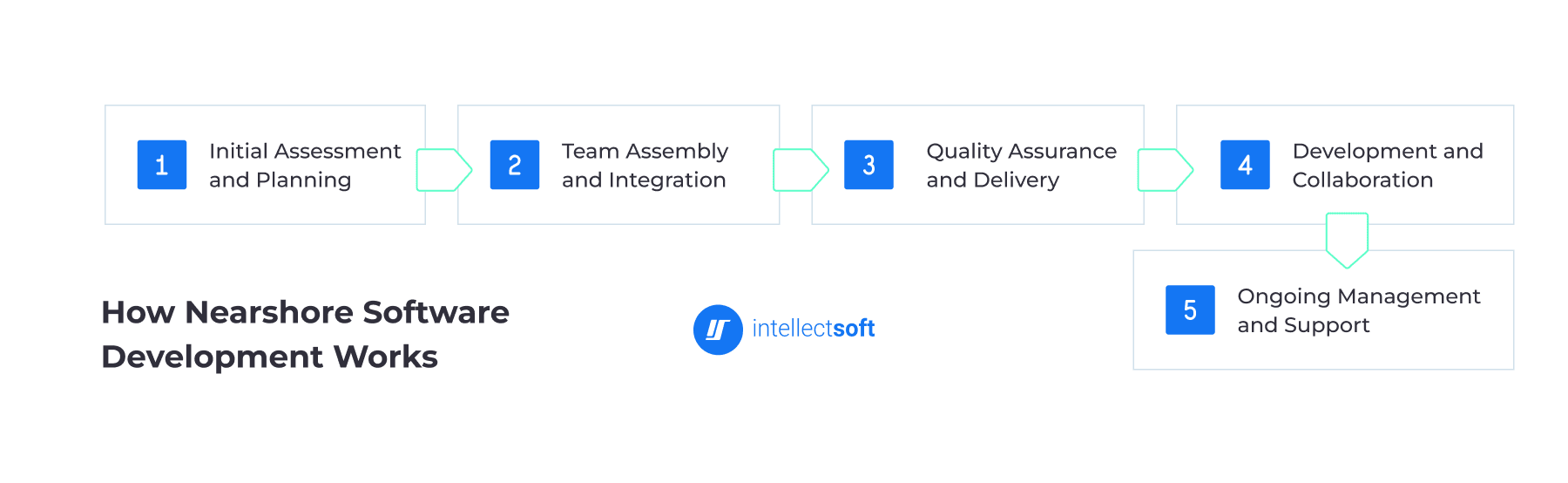
The nearshore development process implements a structured methodology that delivers high efficiency while preserving quality standards.
- Initial Assessment and Planning. The process starts with a complete assessment of your project requirements. The first stage requires teams to identify specific skill needs, establish communication systems, and define project targets.
- Team Assembly and Integration. The selection process for developers follows your project requirements for the development team extension. The team consists of technical leaders and senior developers, as well as any required specialized personnel. The team members receive training on your organization’s cultural values, development methods, and project targets.
- Development and Collaboration. The development cycle uses Agile and DevOps principles, practices, and patterns, including Scrum and ScrumBan. The team stays in sync through daily standups, sprint planning, and rich discussion during retrospectives, which support continuous improvement of the work. The use of modern collaboration technology enhances team communication and project tracking.
- Quality Assurance and Delivery. The quality control process includes thorough testing, code assessment, and quality checkpoints to ensure that all work products meet your requirements.
- Ongoing Management and Support. Team success in the long run depends on continuous team supervision and performance. The implementation of continuous integration and deployment systems allows teams to achieve fast development cycles and stable software deployments, assessments, and relationship upkeep. The process includes scheduled performance assessments, career growth initiatives, and strategic planning for team development.
Popular Latin American Destinations for Software Development Outsourcing
The software development South America has to offer is centered chiefly around multiple expanding technology cities.
Brazil’s largest city, São Paulo, serves as the primary tech center, often referred to as the Silicon Valley of Latin America. Brazil has an enormous developer population, exceeding 500,000 software developers, and supports an active startup environment. The country retained 13,000 startups and at least 16 billion-dollar startups, known as unicorns, throughout the mid-decade period. The Brazilian innovation centers of São Paulo and Rio de Janeiro, and developing centers in Curitiba and Florianópolis, continue to attract investors and skilled professionals.
Mexico serves as a leading outsourcing location for South America software development. This is because it has three major technology centers located in Mexico City, and degrees make up 25% of all academic programs, and it employs more than 225,000 software developers in Guadalajara and Monterrey. The nation produces a substantial number of tech professionals through STEM university programs. The tech cities of Mexico welcome numerous startup accelerators, while major international companies, including Salesforce, HP, Google, and IBM, maintain operations in the region.
Buenos Aires’ fledgling startup community has created two major global technology companies: MercadoLibre, which provides e-commerce services, and Globant, which offers software development solutions. Argentina’s technical education system produces talented engineers who serve U.S. corporations through outsourcing agreements, and 59% of Argentina’s software exports are delivered to the United States.
Latin America Outsourcing
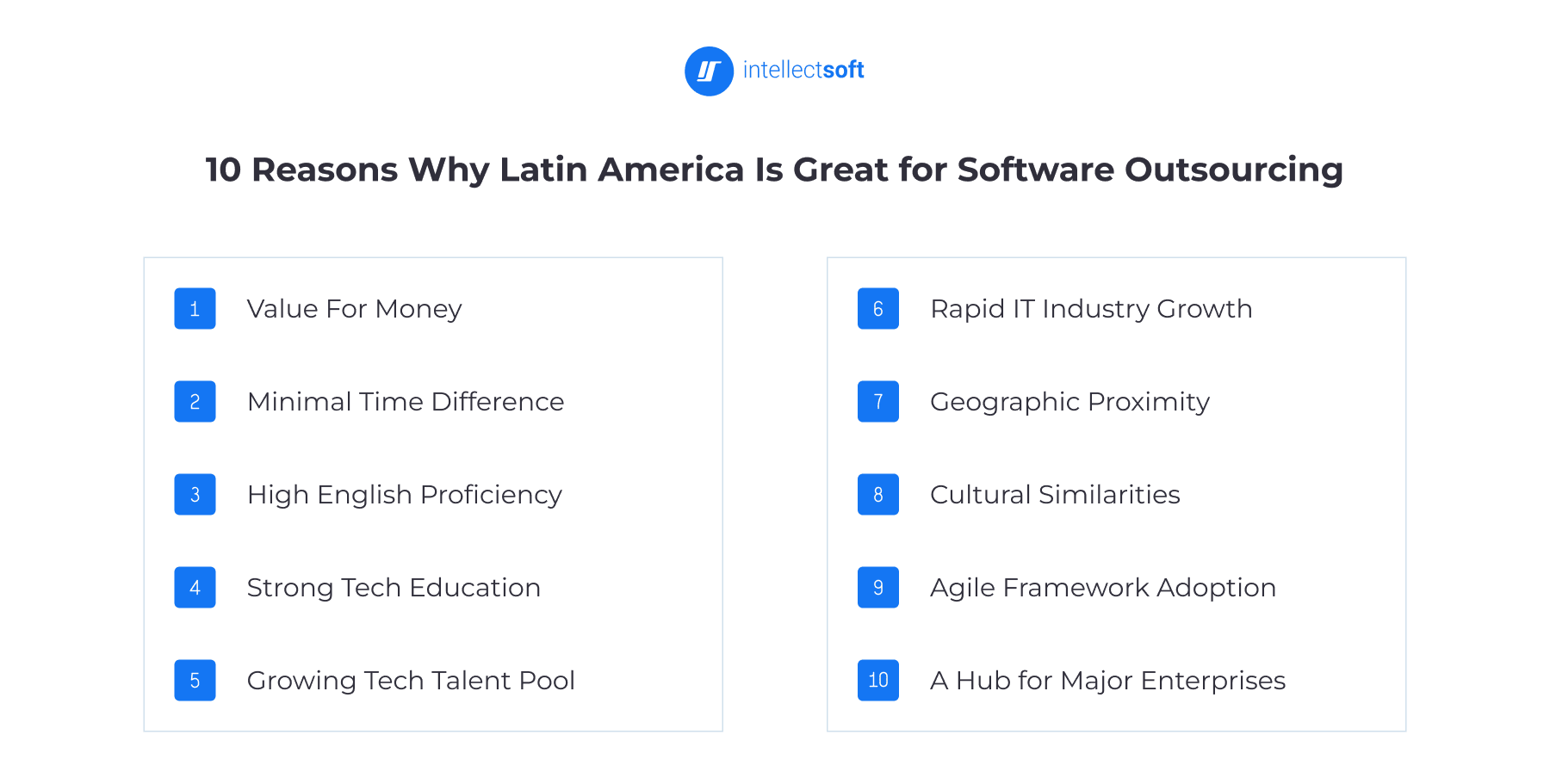
The following analysis examines why businesses should choose South America software development.
1. Value For Money
Though not the lowest cost option in the world, hiring in LATAM is considerably less expensive than hiring in North America. A senior software developer in the US can cost more than $120,000 a year, whereas a developer with the same skill set in LATAM can be hired for approximately $60,000. That’s more than a 50% savings in just salaries, not to mention savings in benefits, paid time off, and other direct and indirect employment costs.
2. Minimal Time Difference
A larger part of the IT world works remotely; however, physical location still matters to some extent. For instance, time zones in India and China differ widely, making traditional outsourcing projects operationally difficult and leading to delays and miscommunication. The time zone for most countries in Latin America is the same as that of North America. The time lag is so slight that it enables a more efficient working environment, fostering collaboration and keeping communication flowing.
3. High English Proficiency
Latin American countries have highly skilled English-speaking developers, with Argentina among the best. And because English and Spanish are both from the same language group, learners can easily acquire the necessary knowledge.
4. Strong Tech Education
For years, funding for STEM education in Latin America has created an emerging class of technology specialists. Some of the best computer science programs in the world are at the Tecnológico de Monterrey in Mexico, the University of São Paulo in Brazil, and the University of Buenos Aires in Argentina. The country also runs the ‘Plan 111 Mil’ million plan project to train thousands of new programmers, which is a direct way of expanding the talent pool for software development in Latin America.
5. Growing Tech Talent Pool
Latin America has over 2.75 million Information Technology specialists. The vast talent pool shows mastery in .NET, Java, and Python, mobile development, data analytics, and cloud computing. Brazil, Mexico, and Colombia are the leading suppliers of developer talent, giving companies multiple options.
6. Rapid IT Industry Growth
South America software development is expected to reach $75 billion by the end of 2029. Regional startup growth has soared, with more than 60 companies, including Rappi and Kavak, reaching unicorn status. It is the growing fintech and e-commerce segments within the burgeoning ecosystem that drive employees to keep their skills current and develop new ones.
7. Geographic Proximity
While remote work has diminished the importance of physical location, it still matters to a certain extent. Physical proximity between sites still confers palpable benefits for organizations. It is easier and less expensive for US-based companies to travel to meet in person for onboarding, team building, and critical project stages.
8. Cultural Similarities
The way team members work together and their productivity levels, depend heavily on shared cultural values. The work culture of Latin America aligns with that of North America because both regions recognize professional organizational structures. The cultural compatibility between developers from the region and U.S. company structures enables them to join forces effectively while minimizing work style differences that could create obstacles.
9. Agile Framework Adoption
Modern software development outsourcing Latin America follows Agile methodologies as its standard framework, and Latin American teams have fully adopted this method. They’re well-suited to the agile project approach because they’re good at being flexible and working iteratively in teams. Emphasizing flexible delivery and fast product development enables enterprises to respond to market changes and deliver high-quality products more quickly.
10. A Hub for Major Enterprises
Amazon, IBM, Microsoft, and Netflix, along with other tech enterprises, have felt the value of outsourcing software development in South America and have invested in the local resources and infrastructure. Loyalty is important and appreciated; this is why it is the chief reason South America is regarded as a reliable outsourcing destination.
Software Development to South America: Navigating the Challenges
The software development South America offers sometimes can hide inherent difficulties that can result in unanticipated expenses and operational challenges. The main problems in the region result from its economic situation and intense competition for skilled workers.
High Inflation Rates
Multiple countries in Latin America face economic instability as their primary challenge. High inflation rates in Argentina and other nations directly affect business expenses and wage negotiations. Developers in the region request dollar-based compensation because their local currency depreciates, thereby protecting their earnings.
Organizations need to include salary adjustment provisions in their budgets to keep their staff and establish payment systems that adapt to currency exchange rate movements. Employee departures become more likely when developers find better compensation stability at different companies because inflation remains unmanaged.
Competitive Market
Latin America software development market represents an ideal location to find skilled workers. The region’s rising interest has created an extremely competitive environment for talent acquisition. The same pool of skilled engineers is competing for jobs with US and European companies, which inflates salary costs and makes it difficult to attract and retain top talent. Developer salaries range from $80,000 to $120,000 a year; although they are still lower than US salaries, they are rising.
How to Make Nearshore Outsourcing More Effective and Trustworthy
Dealing with the issues of nearshoring is not easy, but with purposeful intent, communication, culture, and the people in the center, synergistic, unbreakable relationships can be built. In the business with and of these principles, success remains.
- Put in place systems of communication grounded in clarity. A critical issue in all business relations is communication barriers. Meeting routines help cross-functional teams focus on a singular purpose. Prior to this, there should be no ambiguity regarding the purpose, goals, and objectives to be accomplished.
- Foster cultural synergy. There is a distinction between Latin American culture and North American culture; however, they are often similar. Invest some time in understanding the local business culture of the region. Conveying an “we are in this together” message rather than a “us vs. them” mentality tends to boost employee morale and collaboration.
- Concentrate on value and impact. Cost reduction is an essential factor when outsourcing software development to LATAM. Still, the best teams tend to emphasize value over price. In the end, a high-quality team making great products will always deliver a greater ROI throughout the lifespan.
- Encourage your team to grow. Let your nearshore team feel like a part of the organization. Support with professional training, operational development, and educational programs for industry conferences. Promote a positive work environment at the company by offering a variety of attractive benefits. These, in themselves, should be adequate to create a loyalty-driven system that helps members improve their motivation while simultaneously lowering attrition rates.
- Apply Agile methodologies. The Agile methodology is most suitable for nearshore development due to its adaptability, incremental development, and frequent feedback on deliverables. The project stays on course through regular sprints and reviews, which also help teams solve problems quickly.
How to Choose a Vendor in Latin America
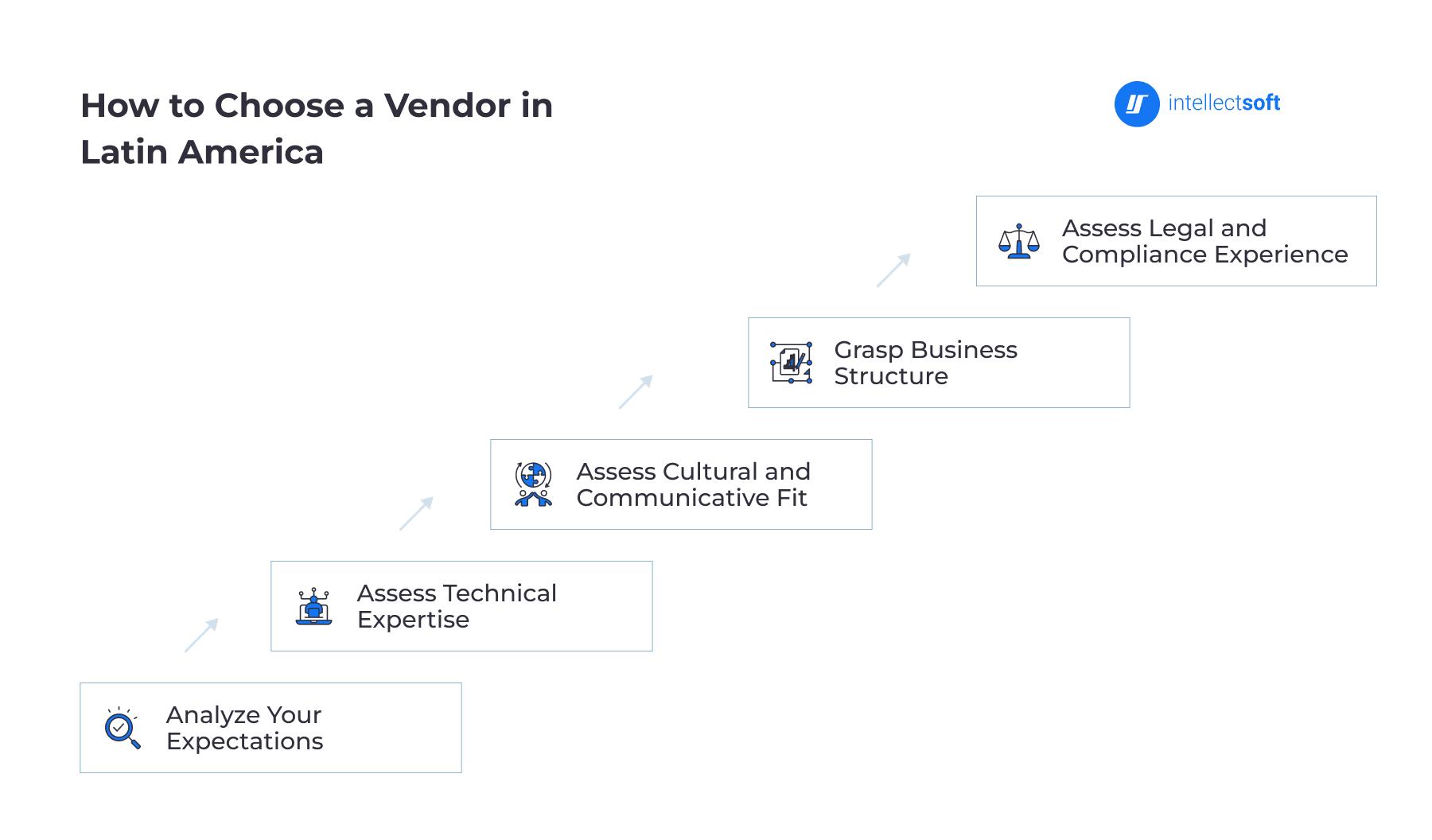
Choosing the appropriate vendor is one of the most critical decisions in your nearshoring journey. Here is how you can try to pick the right one:
- Analyzing Your Expectations: Before you begin your search, thoroughly understand the project’s requirements. Which technical skills are vital? What will the project scope look like? What is your budget, and how long do you have? A description will narrow the way you filter your prospective partners.
- Assessing Technical Expertise: Consider vendors with experience in your field. Check their case studies, client reviews, and portfolio.
- Assessing Cultural and Communicative Fit: A vendor should feel like a partner. From the first conversations, try to analyze their communication style and the degree of openness. Are they responsive? What is their understanding of your business culture?
- Grasping Their Business Structure: Not all vendors use the same model; some offer complete construction R&D centers, while others provide staffing agencies.
- Assessing Legal and Compliance Experience: Completing the compliance and legal paperwork when choosing software development outsourcing South America can be overwhelming. Make sure your chosen vendor possesses a high level of legal and compliance protection. They should show you why local compliance is vital to protect your business from legal consequences.
Intellectsoft is Here to Support Your Software Development Needs
Your business can achieve transformation through software development in South America. But you need an experienced partner to guide you through this process.
We know how the Latin American development market works, including its competitive talent pool and complex legal systems. Our business model operates through transparent practices, expert knowledge, and dedicated support for your business’s success. Our dedicated software development team fully integrates into your organization’s structure.
What drives companies to choose outsourcing software development LATAM?
The region provides companies with three essential advantages: low time zone differences and cultural similarities to the US and an expanding technology sector. Most companies take advantage of the readily available talent, basic infrastructure, and the growing tech market.
What are the main challenges of Latin American software development?
Chasing after talent in the tech industry is vicious; the market here looks really tail-like (Taiwan’s tech market in the 1980s, anyone?), and it’s just difficulty after difficulty after challenge after challenge. The demand for tech talent in the industry is fierce, and the market looks very much like Latin America, like many other nations around the world, faces many economic, geopolitical, and historical challenges before it can really do business. Still, the government is building out its IT hub.
What are the costs of outsourcing software development to Latin America?
The answer can vary drastically in both amount and location. Over the years, there has often been a high demand for talent, and the salary expectations for seniors tend to range from 80k to 120k+. Although demand for software development continues to grow, rates in Latin America are still below those in the US. Software development rates in Latin America are rising due to increasing demand, though they are still lower than those in the US.
How do I ensure the quality of my Latin America software development outsourcing project?
You should define project requirements and quality standards in the very beginning. Most crucial, however, is to follow the strategy for working with the vendor you select. Don’t forget to check their history and the level of expertise. Apply deep scrutiny to your recruitment procedure.


Source link