



header detail 1
header detail 2
RBTechFS
  • Home
  • Who are we
  • What do we do
  • Blog
  • Contact Us
menu
close

Need Help? Talk to an Expert

+1 (758) 729-4361
RBTechFS
  • Home
  • Who are we
  • What do we do
  • Blog
  • Contact Us

Need Help? Talk to an Expert

+1 (758) 729-4361

Construction Technology Trends in 2026

Home Construction Technology Trends in 2026
  • Written by rbtechfs
  • March 16, 2026
  • 0 Com
Trends

Updated: February 5, 2026

For a long time, construction had a reputation as a dinosaur among other industries. It was too conservative and resistant to change. But that story is not about modern construction businesses that are dynamic and innovative. 

You know how difficult it is not to lag behind your rivals, even if you’re integrating modern technologies. So many challenges are still waiting for you on your way.

First, you feel the pressure from other companies. Second, your clients are expecting more and more technological advancements. Finally, construction regulations are adding more strain. For example, in many countries, Building Information Modeling (BIM) is now a must, and you can’t ignore this requirement. According to the UK’s ISO 19650 standard, digital construction is no longer optional.

So how can you stay unique in such conditions? You can’t afford to be outdated. That’s why you should adopt the right construction technology trends to build faster and smarter and stay relevant tomorrow.

In this article, we’ll break down the top 10 building tech trends you can’t ignore in 2026 and show how they can work for your business.
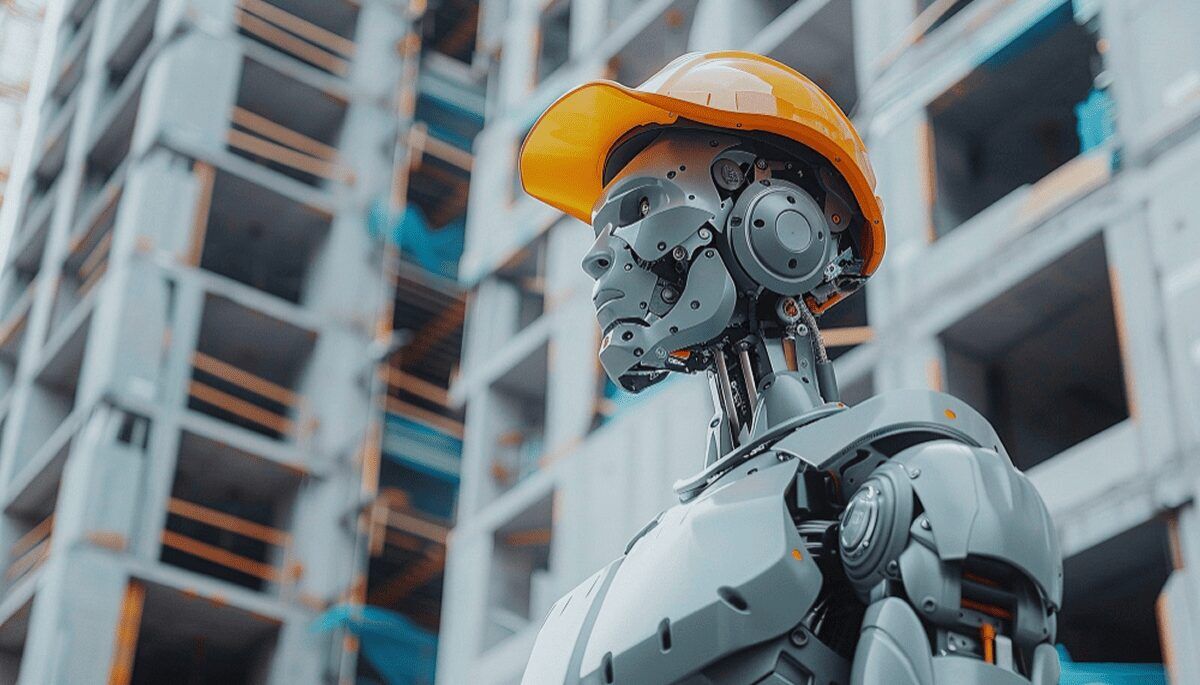
AI-powered construction robot wearing a safety helmet on a modern building site in 2026

What Takes Place Inside the Construction Technology Market

In 2026, the building technology market is expected to grow. And the reasons for this are diverse. Of course, this dynamic is related to the situation in the global market and economic conditions. But let’s clarify what other factors contribute to this growth.

  • The expansion of technologies across construction processes
  • The emphasis on sustainable building approaches
  • Investments in energy projects and infrastructure
  • The emergence of new building methods
  • Legislative support for innovation
  • Adoption of smart construction

According to construction digital, the construction technology market is expected to reach $15,5 trillion by 2030. And the use of digital instruments is a main reason why we will observe this dynamic.

Some businesses can’t imagine their work without AI, IoT, and BIM, which help them with planning, the rational use of resources, and cutting costs. So the technological boom in the construction industry has already started. And China, the U.S., and India are already in this boat because they can boast of their sustainable, large-scale construction projects.

It comes as no surprise that with the emergence of new construction technology trends, businesses have to change their approaches to project management. They are not afraid of trusting some processes, like project planning or estimating, to construction software. So this gives their teams more productivity and helps prevent missed deadlines
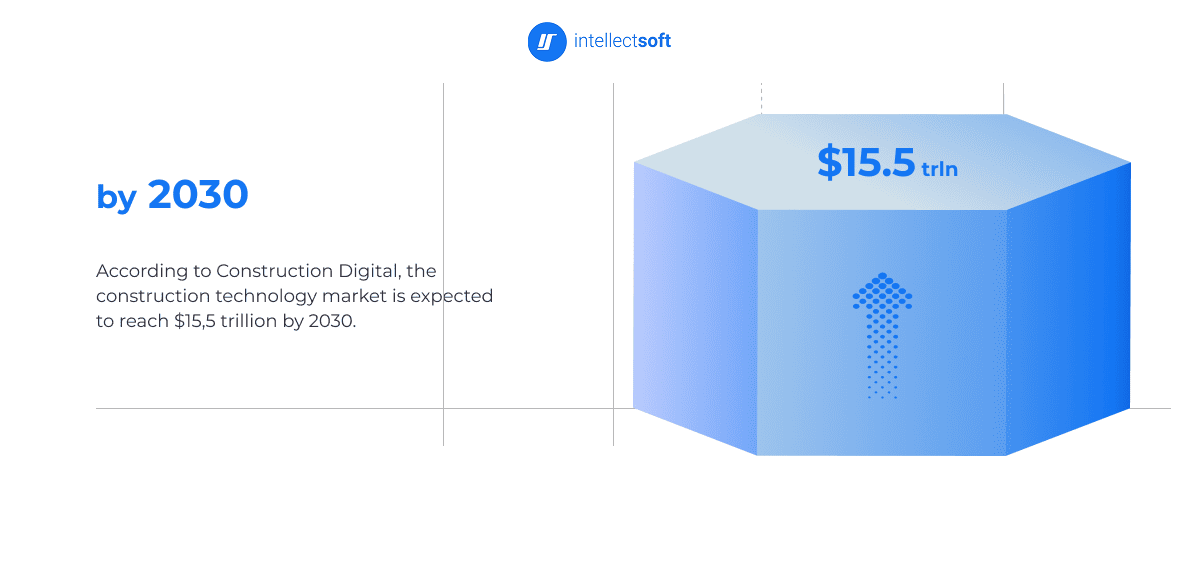
Infographic showing construction technology market growth projected to reach $15.5 trillion by 2030

Global Construction 2030 forecasts that the construction market can reach 85%, and that is around $15.5 trillion globally. The top players are China, the U.S., and India, which account for more than half of the global increase, about 57%.
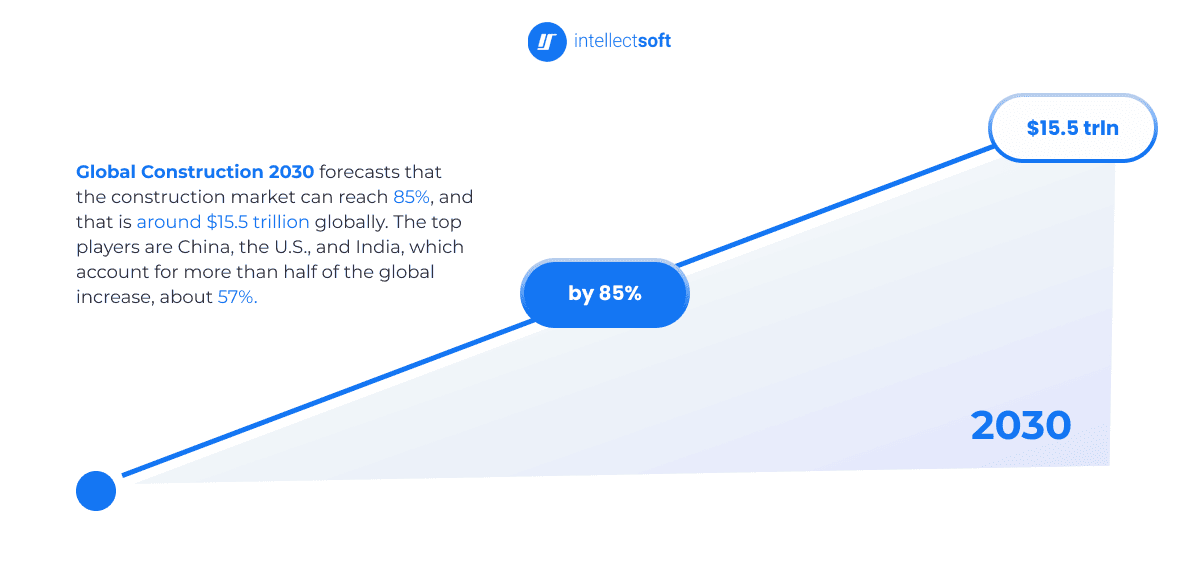
Chart illustrating global construction market growth reaching $15.5 trillion by 2030 with 85% increase

The current state of the construction technology market creates favorable conditions for business growth. With construction software in place, companies don’t limit their opportunities and can confidently take on large-scale projects. The good news is that using construction technologies is fully legal and supports reliable, sustainable business operations.

Why Construction Technology Matters in 2026

Before moving to the latest trends in construction technology, we want to explain why technology is a must for your business.

Not long ago, the construction industry was predictable. You planned the project, hired the crew, ordered materials, and built step by step. Today, that reality feels far away.

Labor is harder to find. Material prices change overnight. Sustainability has turned from an advantage into a legal obligation. Construction companies have to act swiftly and make decisions based on their analytics.

So why is construction technology vital for your business?

  • Helps teams detect issues and prevent delays
  • Replaces assumptions with informed decisions
  • Supports automation of routine tasks
  • Optimizes the use of resources

That’s why our clients come to us with requests to automate operations and speed up construction. So we want to share our on-point story. 

How Intellectsoft uses automation to solve real construction issues

One such case is AF Gruppen, a Norwegian construction company. They faced a serious challenge related to the inability to track workforce presence in real time. This was a critical requirement under Norwegian safety regulations, especially during tunnel construction and blasting operations. On top of that, workforce coordination was handled manually, which only increased the risk.

That’s why they turned to us. To solve the client’s issues, we built a custom, cloud-based construction resource management portal. It enables having all critical project data in one system that’s easy to navigate. This building software is a great assistant for teams, especially in terms of staying coordinated and compliant. Everyone involved can now access the right information, work faster, and do their tasks with less effort.

So, construction market technology trends are necessary conditions and driving forces of growth for businesses. Companies that adapt keep projects on track, protect their margins, and stay relevant in the construction market.

Construction Technology Trends 2026 to Watch for Your Business

If you start exploring construction technology trends, you’ll notice just how many options are out there. Based on our analysis of client needs and requests, along with our research into technologies, we’ve identified those that can help you stand out from the crowd. Here are the key trends our team recommends keeping an eye on:
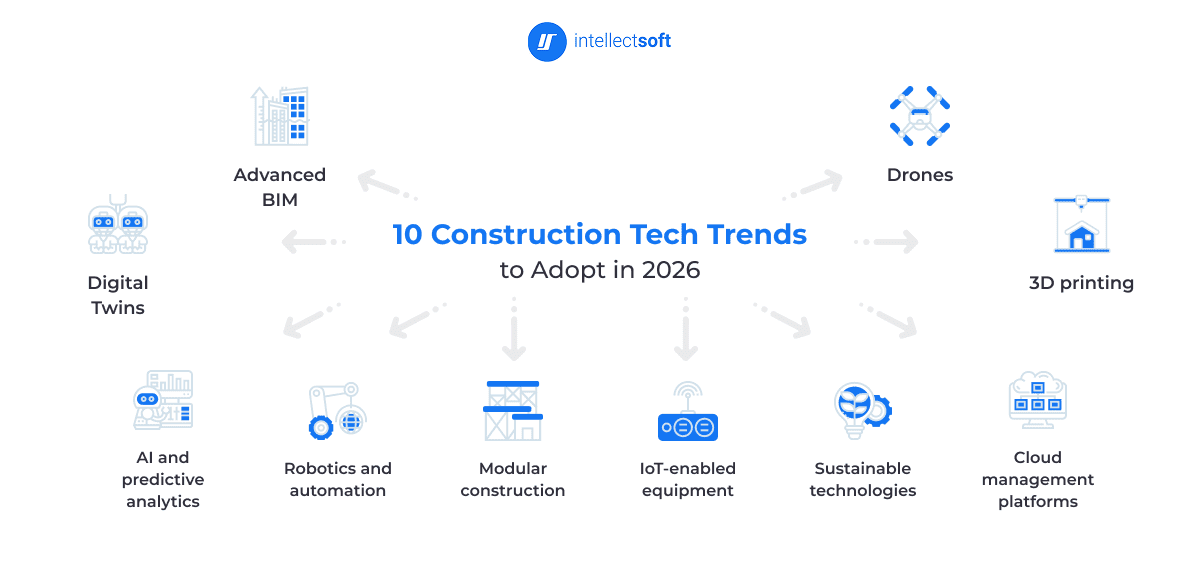
Infographic showing 10 construction technology trends for 2026 including BIM, AI, drones, IoT, and digital twins

AI-powered construction planning and predictive analytics

AI is not a new technology trend in construction. But in 2026, the focus of building companies is on AI-powered construction planning and predictive analytics. This choice is justified, as these are great ways to design, plan, and execute projects.

Architects, engineers, and project managers who combine AI in construction with real-time data can succeed more with the following tasks:

  • Design optimization: create multiple design options and pick the best one
  • Material efficiency: reduce waste and cut unnecessary costs
  • Environmental impact modeling: test designs for sustainability before construction begins
  • Project planning: predict potential risks and prevent possible issues and delays

No doubt, if your teams use AI in planning and predictive analytics, they will avoid costly mistakes, save time and money, and deliver better projects.

Digital Twins for real-time project visibility

Digital Twin technology is picking up speed in the AEC industry. This system uses smart, multidimensional digital models to solve operational issues and enhance projects.

The real advantage of Digital Twins is that they allow teams to:

  • Model and monitor the construction process in real time
  • Simulate design choices
  • Predict and prevent operational issues before they happen
  • Analyze how spaces are used to find ways to improve planning and energy efficiency

Having virtual replicas of physical buildings that use real-time data increases project visibility. It also helps your teams understand what improvements should be made to deliver a successful construction project.

Advanced BIM adoption beyond design and engineering

Building Information Modeling (BIM) is often seen as just a design tool, and many construction companies don’t realize its full value. Today, BIM can help you manage the entire construction lifecycle, from early concept to project delivery.

If you decide to adopt BIM, here’s what you can do with it:

  • Plan construction stages, track progress, and coordinate projects;
  • Create more accurate budgets and avoid unexpected expenses;
  • Test building performance and make it more energy-efficient and sustainable;
  • Plan maintenance and operate the facility efficiently over the long term;
  • Get a clear, real-time view of your construction project;
  • Manage resources more effectively.

For construction managers and project teams, this construction technology trend is a real gem, especially for complex and large-scale projects.

Robotics and automation on construction sites

Another top technology trend in construction we can’t miss is robotics and automation. Yes, you may say, “We hear about this all the time.” But we want to explain how you can use it if you run big projects:

  • Cut costs through the involvement of robots;
  • Ensure faster project execution by automating routine tasks;
  • Speed up the construction process with the help of bricklaying robots and 3D printing systems;
  • Create safe conditions in hazardous environments;
  • Shorten human involvement and improve site safety by involving robots.

As you can see, robotics and automation can increase the quality of your construction projects. Plus, with this technology, you can better care for your workers and minimize risks related to their health and safety.

Modular and prefabricated construction technologies

Do you remember how, in childhood, you liked to play with building blocks and construct something? Of course, you felt like a true builder.

Modular and prefabricated construction have a similar concept. These are off-site building methods that change the traditional perception of the construction process. According to this approach, some components or even entire construction sections can be produced in a factory. And then, they are connected on-site like building blocks.

Why you should consider prefabricated construction technologies for your projects:

  • Construction can be completed 50% faster;
  • You need less labor and can reduce material waste;
  • Factory conditions can be more favorable for manufacturing some components;
  • You stay more eco-friendly.

Overall, factory-built housing is more than a construction industry technology trend. This is a practical approach to faster and safer building. Plus, this is a great option if you start commercial projects, hospitals, or housing.

IoT-enabled smart construction equipment

Another construction technology trend that we recommend is IoT-enabled smart construction equipment. This equipment collects and shares data in real time. As a result, your team knows what takes place on-site (temperature, humidity, worker safety, equipment health, and project progress.

Here’s how IoT helps construction teams in practice:

  • Monitor sites in real time;
  • Improve worker safety;
  • Maintain equipment;
  • Manage projects more effectively;
  • Support sustainability goals.

With IoT-enabled smart construction equipment, you turn your construction site into a smart ecosystem. Plus, you can combine it with BIM and get a real-time digital view of the project.

Drones and computer vision for site monitoring

The use of drones on construction sites is a frequent phenomenon. They have turned into great assistants due to their capacity to manage sites and collect data in real time. 

Powered with AI, drones can help your team with these tasks:

  • Track project progress with real-time aerial imagery;
  • Create site maps and measurements using 3D LiDAR scanning;
  • Detect structural issues and energy losses through thermal imaging;
  • Carry out detailed inspections and spot problems.

In integration with BIM platforms, you can share data faster, keep models up to date, and make better decisions based on real site conditions. So see, this is a great option to combine a few emerging construction technology trends 2026 to get better outcomes.
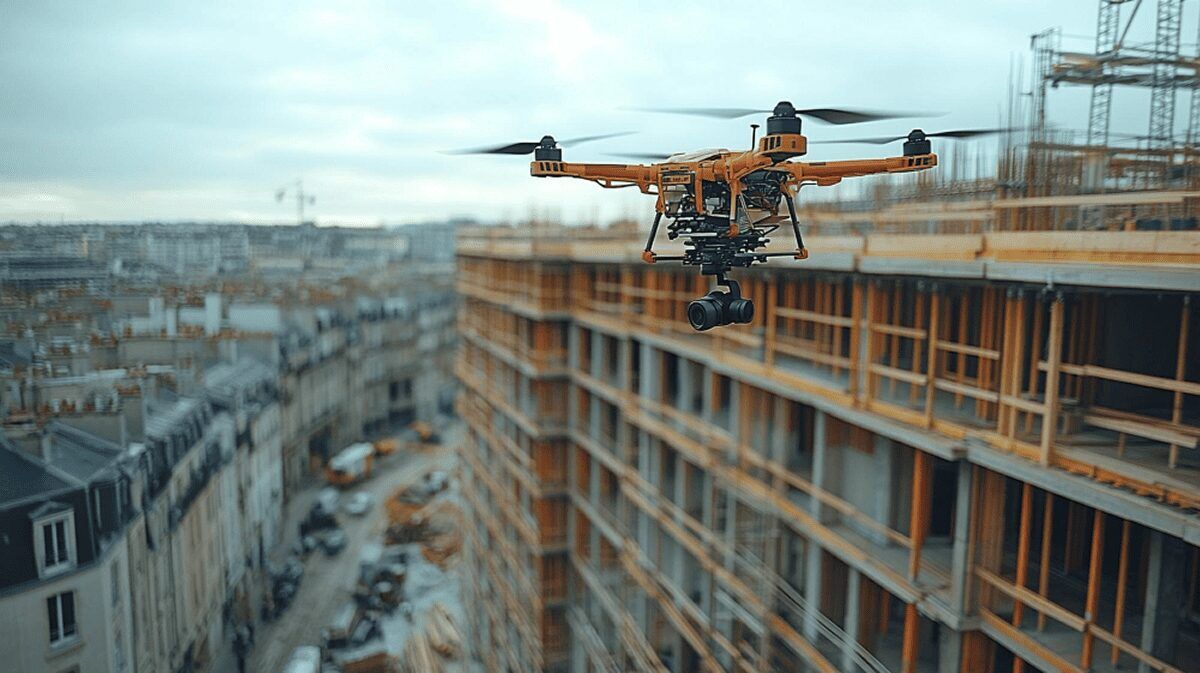
Construction drone flying over a building site for aerial inspection and progress monitoring

3D printing of construction components

3D printing of construction components is the latest construction technology trend 2026 that’s quietly changing the rules in the building industry.

If a few years ago it was like an experiment, today it works not only for tiny elements but also for walls, structural parts, and even multi-story buildings.

Why you should pay attention to this construction technology trend:

  • You print components on-site, so you reduce delivery time;
  • You use the amount of material you need without waste;
  • You speed up construction timelines and reduce manual labor;
  • You get design freedom that traditional methods can’t offer.

Obviously, 3D printing can take over many tasks. So, once you try it on one project, it’s hard to go back to traditional methods.
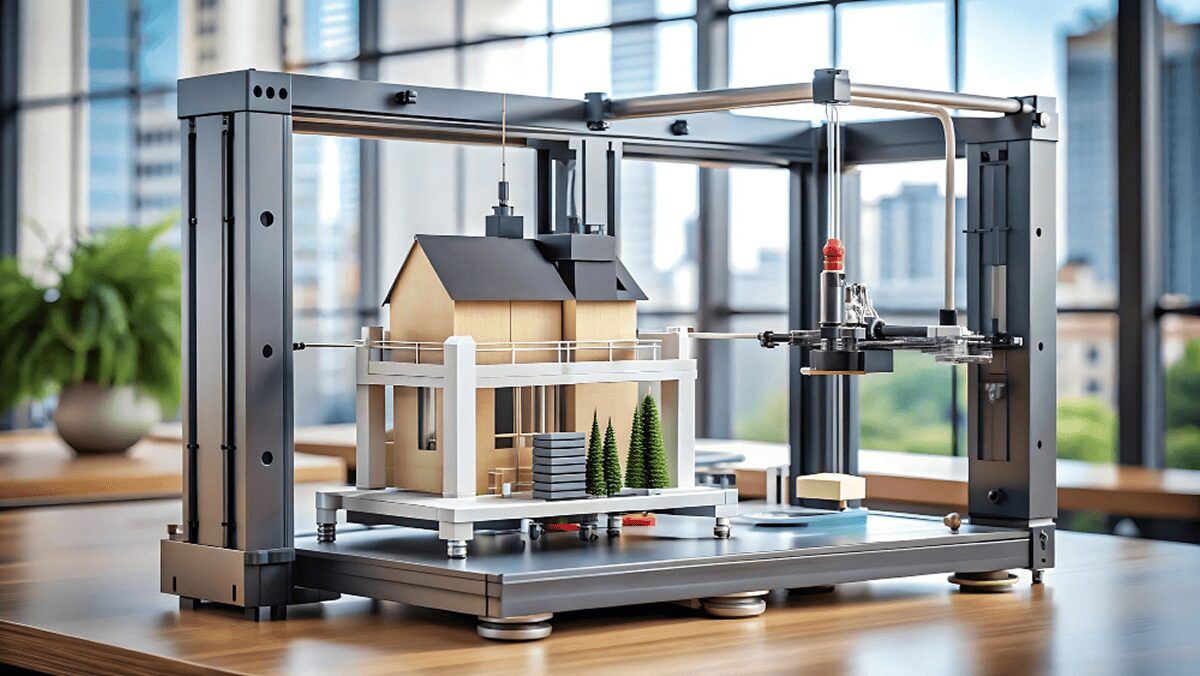
3D printer creating a scale model of a residential building for construction planning and design

Sustainable and green construction technologies

Despite sustainability being a legal requirement in construction, the use of sustainable and green construction tops the charts of the future trends in construction technology. 

So, we’ve compiled the list of the most used innovations:

  • HVAC systems for energy efficiency;
  • Cross-laminated timber;
  • Advanced insulation materials;
  • Smart lighting systems;
  • Green roofs and green walls;
  • Modular construction;
  • Prefabricated building blocks;
  • Renewable energy integrations.

Why is the use of green construction technologies justified? First, you can reduce your carbon footprint and cut energy costs. So, this is about social responsibility and rationality. Second, you can improve building performance, so your clients receive higher-quality solutions. Thus, you’ll gain many benefits while following legal regulations.

Cloud-based construction management platforms

If you’ve ever struggled to keep all project info in one place, a cloud-based construction management platform is the right solution for you. Your team can work together in real time. And that fosters better communication and cooperation. Plus, this system can centralize your schedules, budgets, and documents.

Why a cloud-based construction management platform is vital for your projects:

  • Automates operations and reduces paperwork;
  • Connects office, field teams, architects, and clients seamlessly;
  • Provides you with insights from real-time data;
  • Works for any project size.

With a cloud platform, your team is more efficient and makes more informed decisions faster than usual. Forget about messy data and enjoy real-time cooperation between your employees.

How to Choose the Right Software Development Company

Now that you’re aware of the situation in the construction market and know the top construction technology trends, it’s high time to understand how to integrate them into your business.

Of course, for this, you need an experienced software development company that can not only suggest technical solutions but also tailor them to your business needs. That’s why we’ve compiled some criteria that can be helpful while making your choice:

  • Understanding of construction regulations and workflows;
  • Experience with construction-specific technologies;
  • Ability to deliver scalable and secure solutions;
  • Focus on data integration and interoperability;
  • Proven track record in custom construction software development;
  • End-to-end delivery and long-term support.

Seeking a company that meets all these requirements? Trust this matter to Intellectsoft. With more than 18 years on the market, we’ve helped clients from the US and Europe grow through technology, building custom solutions with real business value. Many of our partnerships last for years and are built on mutual understanding and trust. 

We offer construction software development services and are ready to integrate the recent trends in construction technology.

Want to add technologies to your construction operations? Contact us, and let’s discuss how to transform your building business.

Key Takeaways

  1. The top construction industry technology trends of 2026 include BIM, IoT-enabled equipment, drones, AI-powered planning, Digital Twins, cloud platforms, 3D printing, sustainable technologies, modular construction, and automation.
  2. New trends in construction technology don’t differ from those that were popular in 2025. But they provide businesses with more practices for employees’ safety, sustainability, and effective construction management.
  3. Businesses solve problems related to labor shortages and expenses. That’s why they see technologies as great instruments to handle them.
  4. Construction companies are shifting from the use of isolated tools to the development of complex technology ecosystems.

1. What is the state of the construction tech market in 2026?

The construction industry can experience financial strain, feel pressure from rivals, and deal with understaffing. Businesses should be ready for shifts in customers’ preferences. To stay afloat, they should approach building and operations optimization differently. Sustainability and building software have turned into obligatory conditions to stay competitive. The emergence of new trends in construction technologies opens new possibilities for the delivery of efficient and high-quality projects.

2. What are the use cases of AI in construction? 

You can use AI at all stages of the construction process by turning it into a helpful instrument for your teams. As it can integrate with BIM, automation, robotics, and drones, the scope of its applications extends. AI does a good job at resource optimization, safety monitoring, and predicting risks. So, if you use it, you can save costs and improve worksite safety.

3. What benefits does technology bring to construction?

First, advanced technologies can increase the efficiency of your construction processes. Second, they can contribute to better project planning and foster cooperation among your teams. Finally, technologies create safer working conditions and minimize risks. 

4. Why does analytics matter for construction businesses?

It’s difficult to imagine construction without analytics. Companies produce tons of data that should be processed and turned into actionable insights. AI can cope with this by analyzing raw data faster than employees. With construction analytics, it’s not a problem for you to estimate project timelines, predict risks, and improve the use of resources. 
The hospitality industry depends a lot on keeping customers happy, but it’s getting harder to attract and keep them. The pandemic hit this industry hard, and now market competition is tougher than ever, with competitive offerings swaying customers. Hospitality businesses are willing to spend big to win customers back. The main questions for many are: how can we stay ahead of the competition, keep our customers, and increase revenue? Keep reading—we’ve got some answers.

Customers today have so many options that getting their attention is a real challenge. It’s not easy to make them choose your business over others. What worked 10 years ago doesn’t work the same way now. Back then, people often chose businesses based on reputation. But with new types of businesses (boutique hotels, craft cafes) popping up or big enterprises getting a new strategy, expectations have changed. The good news is these businesses have shown what works: great customer service. They focus on personalizing the experience, making things easy for customers, offering loyalty programs, and using smart technology.

In this article, we’ll explore these tech strategies and show you how they can help your business grow, and double the revenue. Keep reading to learn more!

The Importance of Customer Satisfaction in the Hospitality Industry

Customer satisfaction, which equals exceptional customer experience, is the backbone of the hospitality industry. It plays a central role in driving revenue and loyalty, as satisfied customers are more likely to return and recommend a hotel, restaurant, or other hospitality business to others. In fact, a study by the Harvard Business Review found that a 1% increase in customer satisfaction can lead to a 0.5% increase in revenue. Moreover, loyal customers are more likely to forgive mistakes and continue doing business with a company, even if they experience a negative encounter.

Let’s quickly review the challenges the hospitality industry is facing right now so we can move on to the solutions and our case studies.

Challenges in Hospitality

As businesses navigate the changes in the hospitality industry, there are some key areas where a little improvement can go a long way. From improving customer service to embracing digital transformation and tackling labor shortages, we’ll take a closer look at today’s biggest challenges—and, more importantly, how technology can step in to help. Let’s get started!

Poor Customer Service

Even with strong and high-quality business offerings, poor customer service can drive potential customers and existing customers away. Common issues include:

  • Long wait times in customer service queues (it is worth remembering that our attention spans 8 seconds, and we live in a very busy world, so quick and efficient responses are more important than ever.)
  • Poorly trained customer service representatives
  • Lack of follow-up
  • Services not being done properly or quickly
  • Recall issues that require multiple service calls

These problems can frustrate customers. But, at Intellectsoft, we believe that the right approach, combined with technology, can address them effectively.

Digital Transformation Gaps

Approximately 50% of hotels are adopting new technologies, with 43% automating repetitive tasks and 39% upgrading existing systems.
Source: workstaff.app

Source: workstaff.app

While many businesses are adopting digital solutions, some still struggle with outdated systems and fragmented data. Legacy companies often face chaos when trying to manage their data and create new systems or add features.

Some of the recent examples include clients coming to us to create AI solutions for their services while their data simply was not ready for the advanced tasks. We advise stepping back, communicating with a company objective, and working on keeping the data clean (centralized, structured, and segmented).

When we’re asked to create advanced systems using AI, we always emphasize the importance of organized data. To train AI and build such complicated systems that truly work, you need to start from the very beginning—collecting, storing, centralizing, and organizing it. We encourage our clients to align all departments to work internally on the data so we can create a unified digital system that delivers personalized experiences.

If you’re unsure where to start with your data, we can help. Collecting feedback at various touchpoints along the customer journey is crucial for gaining insights into customer satisfaction and loyalty. Book an IT consultation with us, and our experts will guide you in mapping out a path to get more from your data and build a system that works for your business and team.

Reskilling Staff

The pandemic hit hard in early 2020, especially for the hospitality and travel industries. Even five years later, many businesses are still feeling the impact. Recruiting and retaining skilled staff has become a major challenge post-pandemic.

Reskilling to address technology’s impact is of utmost importance, as about 40% of hotel General Managers place it among their top three workforce challenges.

Source: Deloitte

We strongly believe that adopting the right technology can help. For example, creating an app to train your staff not only saves time but also ensures consistency in learning. AI assistants can also work alongside your team, helping with tasks like recruitment (providing industry insights, crafting emails) and staff training. Imagine having an app dedicated to making your team’s work easier and more efficient!

How Technology Tackles These Challenges and Supports a Customer-Centric Hospitality Culture

Automation, AI, and similar technologies may threaten many. However, the debate about replacing humans isn’t about that—it’s about cooperation and working hand in hand with technology to achieve the highest standards and establish brand-new “golden standards.” Technology is here to assist staff in listening to and collecting customer insights from data.

Let’s review some of our cases to see examples of how technology helps improve customer experience and supports customer service.

Examples of Intellectsoft projects

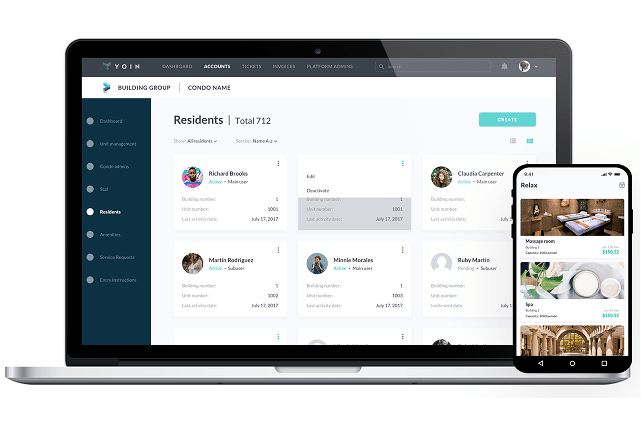
Property management systems (PMS)

We created a web platform and mobile app that makes managing daily tasks easier and offers extra services to improve residents’ experience. It gives a clear overview of daily activities and helps with managing units and users. Residents can easily book amenities, submit service requests, and report incidents. The platform also includes features for equipment management, key instructions, workflows, and custom permissions. This makes it easier for staff to stay on top of equipment and ensure residents have all the information they need. Plus, tools like announcements, quick votes, a forum, and a community calendar help build a connected and engaged community.

Guest Experience Management App

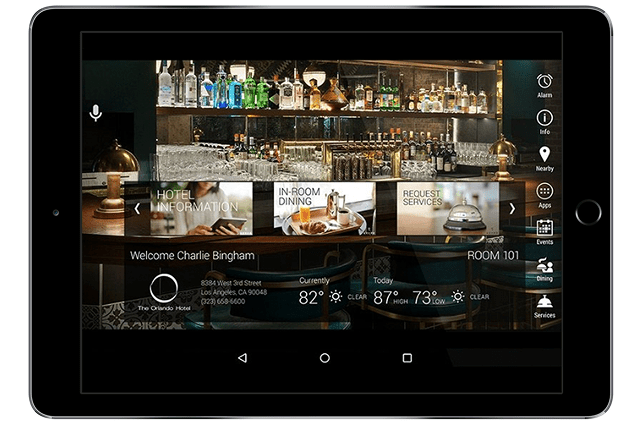
Our next app helped our client improve their guest experience by replacing printed marketing materials and the need for phone calls with a smart solution. Now, guests can easily order in-room dining, make reservations, and interact with staff— through a simple tablet in their room. The solution includes three parts: a custom in-room tablet with a variety of services, an admin panel for hotel staff and service providers, and a backend system that connects everything together. This approach makes things easier for guests and staff, improving both convenience and efficiency.

Existing Customers First: Building Loyalty with Personalized Touchpoints

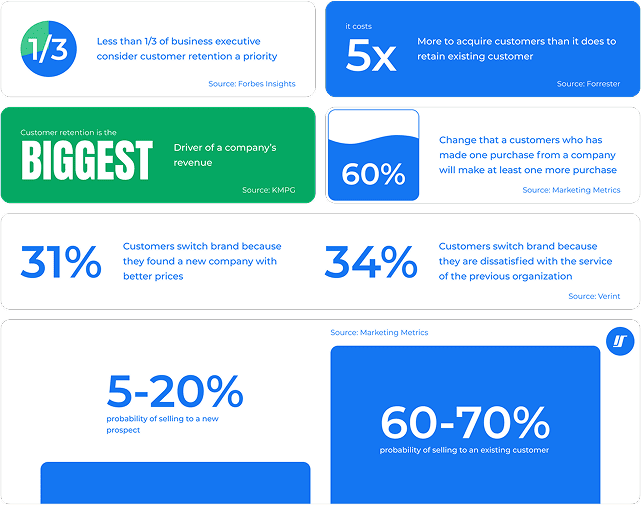
Keeping existing customers is not just a strategy; it’s well-known that retaining existing customers is more cost-effective than acquiring new ones. In fact, research shows that it costs five times more to acquire a new customer than to retain an existing one. KPMG named customer retention as the number one revenue driver for the company.

Moreover, a 5% increase in customer retention can lead to a 25% to 95% increase in profits, showing the significant impact loyal customers can have on a business’s bottom line. Retention strategies, like personalized experiences and loyalty programs, can foster long-term relationships and generate recurring revenue, ultimately making them an invaluable part of any business model.

Personalization: How Technology Can Help?

Everyone loves to feel special—it’s part of being human. In hospitality, personalization has evolved from being a luxury to an essential standard. With the right technology to manage your data effectively, you can deliver those “wow” moments that guests won’t forget.

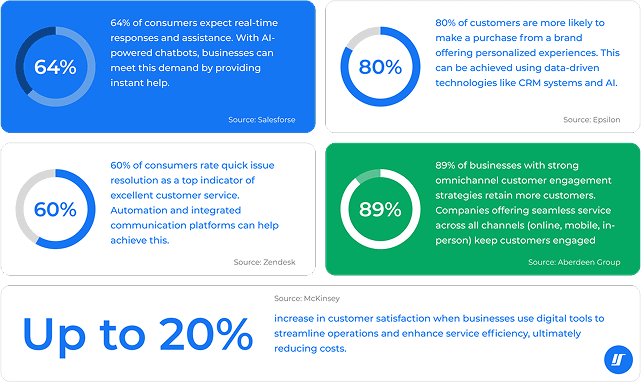
More than half of hotel chains are already using personalization features on their websites, booking platforms, and apps, and another 39% are planning to follow suit soon. They’re tailoring experiences to fit guest preferences perfectly.

Source: Deloitte

How does technology make it happen?

  • CRM Systems: They help you keep track of guest preferences, booking history, and special requests so you can offer services tailored just for them.
  • Loyalty Programs: Personalized rewards and offers show your guests that you value them, keeping them coming back for more.
  • AI Personalization: AI analyzes guest data to predict what they’ll love (from room upgrades to local recommendations) before they even ask.
  • IoT Gadgets: Smart room features like voice-activated assistants, or temperature controls adjust to your guests’ preferences, making their stay more comfortable.

With tech-powered personalization, you’re building loyalty and maximizing the lifetime value of every customer.

Our Case Study: Smart Hotel Management & Loyalty Program

For one of our clients, we created a smart room solution, complete with a custom IoT system. Guests can use a mobile app to control services, explore amenities, and find resort information– with a special touch to their suite type. For the client’s entertainment business, we improved their legacy software by running a full IT and code check, fixing issues, and making the system better for customers.

Along with that, we developed a mobile app for the loyalty program, allowing businesses to effortlessly reward their customers and keep them engaged with exclusive benefits.

Our solutions not only helped the client with special experiences for guests; it also improved operations, cutting costs by eliminating inefficiencies. Here’s what our experts shared:

“We transitioned away from ESB (Enterprise Service Bus) systems, which previously cost millions, and replaced them with more efficient, self-managed solutions. Similarly, we’ve implemented Device Farms that improved operations and saved resources.”

Leveraging Software to Increase Upsell Opportunities

Here are some examples of tech tactics that will help your team sell more and introduce new offerings to existing customers, improve overall efficiency leaving your team grateful:

Dynamic Pricing Algorithms

For finance and marketing teams, manually calculating pricing by segment to introduce your clients can be incredibly challenging. AI-powered tools can strongly optimize these strategies by analyzing your database in detail.

Upselling via Apps

Boosting revenue in the hospitality business often comes down to personalized experiences. Imagine this: a guest books a room, and then your app suggests a spa package or a room upgrade at just the right moment. Later, it nudges them to book a dinner reservation or a guided tour designed to their preferences. With apps offering these personalized recommendations during and after bookings, you’re not just increasing your revenue per guest but also skyrocketing their experience. And you do it in a sustainable way, not by speculating, but by offering what your customers desire based on their previous experiences. It’s a win-win: seamless, helpful, and far from pushy.

Inventory and Resource Management Software

Making every resource count in your hospitality business is key. Inventory and resource management software allows you to effortlessly track everything from linens to room availability, ensuring nothing goes to waste. Having real-time insights to reduce overstock, avoid shortages, and optimize operations assists sustainably keep everything under control and know what you need to focus more. It helps maximize room occupancy by aligning bookings with available resources, ensuring every room and item is used effectively. This approach leads to smarter management, better guest experiences, and a noticeable boost to your bottom line.

Adopting these strategies not only optimizes your operations but also drives business growth. Ready to discover how technology can elevate your goals? We’re here to create a tailored solution for you.

Steps For Implementing a Customer Service Technology Solution

Improving customer service in hospitality doesn’t have to be a daunting task. With the right technology, you can smooth the path of your operations, speed up response times, and elevate the overall guest experience. Here’s where you can make it happen:

1. Understand Your Needs

Start by identifying the challenges your business is facing. Are you struggling to manage high volumes of inquiries, track customer feedback, or personalize the guest experience? Pinpointing your needs will guide you to the best solutions.

2. Pick the Right Tools

Choose technology that aligns with your goals. Look for solutions that are scalable, easy to use, and integrate effortlessly with your current systems. Options like CRM software, live chat tools, or a guest experience app can make a difference.

3. Equip Your Team

Technology is only as effective as the people using it. Train your staff to make the most of the new tools, so they can deliver exceptional service and resolve issues quickly. Confident, well-equipped staff creates happy, loyal customers.

4. Keep Improving

Once implemented, monitor how well the solution works. Are response times improving? Are customers more satisfied? Regular evaluations will help you fine-tune your approach and keep things running harmoniously.

Some Tech Ideas for Hospitality Businesses

  • CRM Software: Manage customer interactions and preferences.
  • Guest Experience Apps: Delight guests with personalized experiences right at their fingertips.
  • Amenity Management Systems: Simplify operations for everything from room service to facility bookings.
  • Helpdesk Software: Resolve customer issues optimally.
  • Live Chat Tools: Offer instant support and answers.
  • Social Media Management Tools: Keep customer interactions engaging and organized.

Integrating these strategies will not only improve your customer service but also deliver unforgettable customer satisfaction, loyalty, and, ultimately, your bottom line. Ready to take the next step? Book a consultation with our experts.

Conclusion

To wrap up everything we’ve discussed, customer satisfaction and experience are at the heart of hospitality. Retaining customers is more than just keeping them around—building strong, long-lasting relationships and consistently meeting their evolving needs. By understanding their pain points and offering personalized solutions, you can inspire loyalty and drive progress. With the right technology and continuous improvement, your business can stay ahead, let go of what no longer serves you, and keep growing.

At Intellectsoft, with over 17 years of experience in software development, our expert team is ready to help. We create everything from mobile apps to full-fledged portals and systems, leveraging the latest technologies like AI, Cloud, and Machine Learning. With deep experience in the hospitality industry, we’re here to craft personalized solutions that bring your business unforgettable customer experience and retain your valuable clients.

Ready to double your revenue and level up your customer retention strategy with personalized technology? Contact our experts, and we look forward to working hand in hand with you to build or revitalize the perfect app or system for you.

author

Tetiana Borysova

Content Writer

arrow

Source link
LEAVE A COMMENT Cancel reply
Please Enter Your Comments *
rbtechfs

All Categories
  • Trends
RECENT BLOG
  • Construction Technology Trends in 2026

    0 Comment

  • Gamification in Banking: Building Loyalty & Engagement

    0 Comment

  • Top Software Development Companies in LATAM

    0 Comment

  • Data Analytics in Banking: The Ultimate Guide

    0 Comment

image
image
image
image
image
Updated_RBTFS-Logo
  • Home
  • Who are we
  • What do we do
  • Blog
  • Contact Us
  • Home
    • Home 1
    • Home 2
    • Home 3
  • About
    • About Us 01
    • About Us 02
  • Projects
    • Projects
  • Blog
    • Blog Grid
    • Blog List
  • Pages
    • Contact
    • Team Members
    • Testimonials
    • Our Services

Copyright by rbtechfs.com 2024. Designed by P1 Marketing All Rights Reserved