








Product software development is one of the most failure-prone activities in modern business. The Standish Group CHAOS Report shows that only about 30% of software projects are finished on time, within budget, and with the expected scope of work. These results typically do not stem from a single mistake, but rather a series of decisions that compound over time.
As the software product development process goes on, the scope that seemed apparent at first starts to alter when needs and priorities change. To build a successful software product development process, you would need three things: a clear strategic direction, a systematic way to construct the product, and the right people to do it. This article covers it all, walking you through creating a development plan, controlling delivery, and building teams that help the product grow over time.
Software Product Building in 2026: What Has Changed
Software product development in 2026 is greatly different from how it has been in the last few years. AI, data, and cloud technologies have transformed how people collaborate in developing software for products. They have made it easier to get development done, but they have also made it more expensive to make mistakes. Let’s go through the things that we see have changed:
From building features to operating a product system
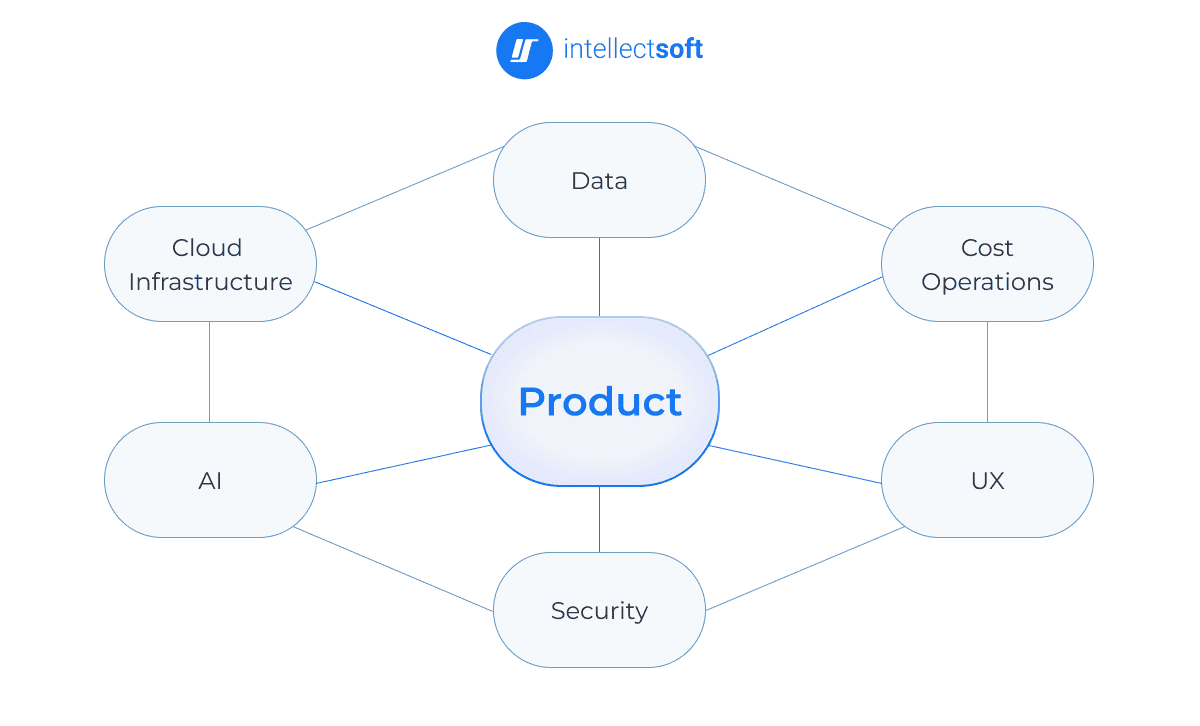
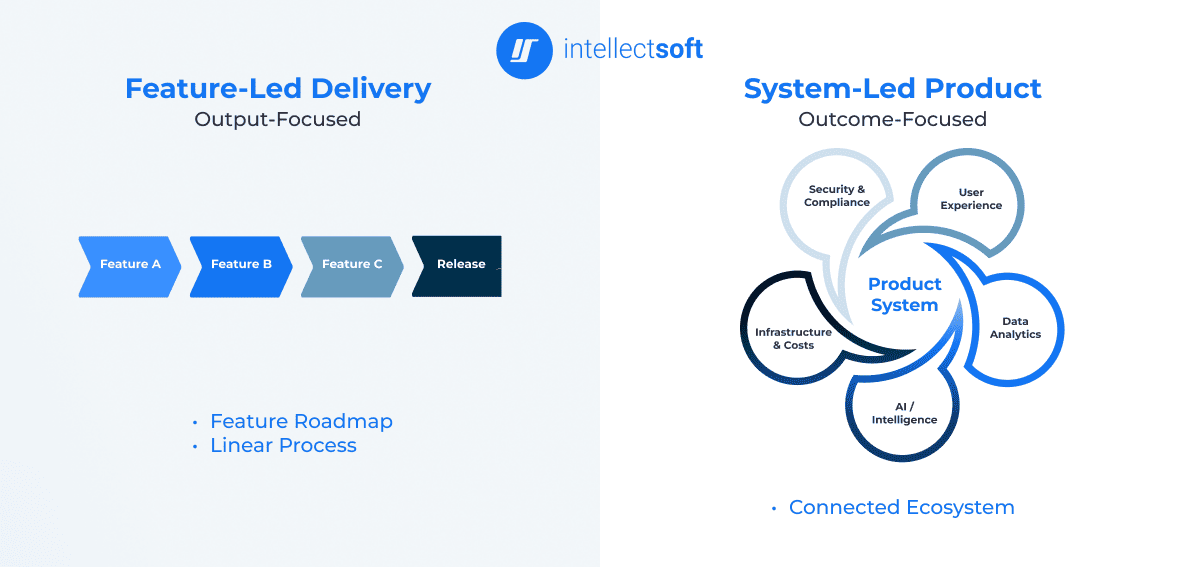
One of the most visible changes is that the focus is now on quality and relevance instead of how many features there are. Delivery was the main focus of product roadmaps. These days, they are more and more based on results that can be measured and how they affect the business. Companies now know that modern products are interconnected systems where code, data, platforms, AI, and infrastructure all have an effect on each other. This means that the system’s overall performance is more important than how many features it has.
AI revealed where teams get trapped
It is now easier to quickly come up with and test ideas thanks to AI. Because of this, engineering capacity isn’t usually the biggest problem in 2026. What really limits things is how good the strategic decisions are. Teams can now create prototypes, features, and tests more easily than ever before. The hardest part is picking the problem and coming up with a solution.
Cost is now part of product design
Cloud usage and AI consumption are no longer background technical details. They are an important part of the software product design and development planning. They change how products are made and how they work as more people use them. Every feature adds a recurring cost, and the amount of data, how it is used, and the infrastructure all affect how an AI workflow works. Strong product teams take these costs into account early on, along with performance, reliability, and ease of use.
Define the Product Strategy Before You Start Software Product Development
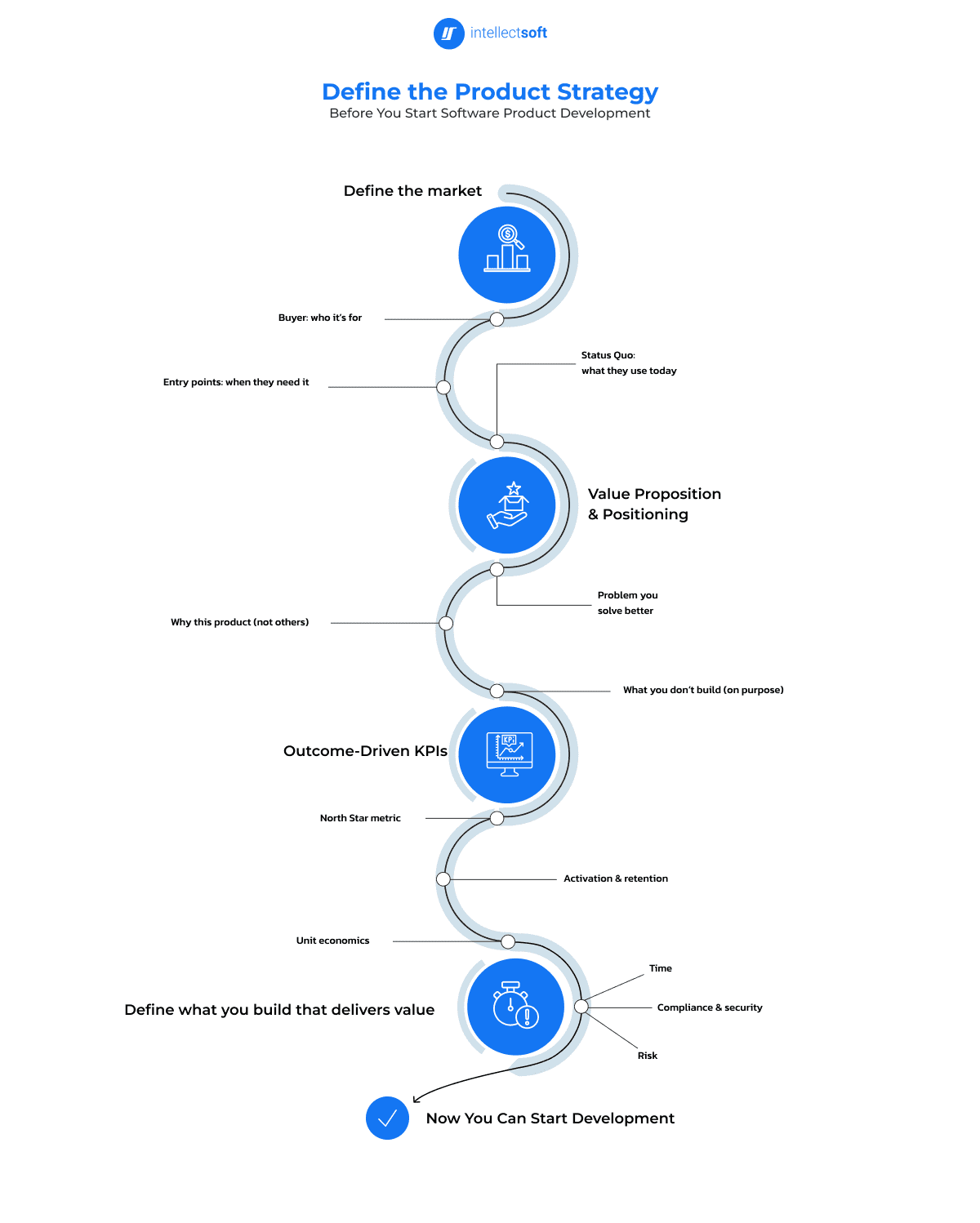
It sounds obvious, right? Start with strategy. You would be surprised how many teams do not do this step in development. As many as 70% of product initiatives fail because they do not have a strategy or the right goals, according to McKinsey. Strategy has one of the biggest impacts on successful software product development. Without market research, an understanding of your target audience, clear product differentiation, and correct positioning, even well-executed software product development can result in products that are built on time but fail to find users, because they were based on assumptions instead of facts and data insights.
Defining the market: the buyer, the moment, and the status quo you’re replacing
Your product software development starts with market research and clear goals for what you want to make. Your insights will help you segment the group of users, and from that, you choose a target group (you can’t create a product for everyone, so you need to think carefully about your target audience). Once you identify who you are making it for, you can start asking questions like, “What problem do they need to solve?” or “What are they currently using if we didn’t have this product?”
Value proposition, positioning, and differentiation
Positioning is how people think about your product in relation to other options. It’s how your team thinks about what should and shouldn’t be on the roadmap. Being different doesn’t mean being different for the sake of being different. It means being meaningfully better on the attributes that matter most to your target customers within the category.
Outcome-driven KPIs
Having a North Star metric helps your team focus on the primary value delivered by the product. There are many other metrics like activation, retention, and economics that can help in understanding the sustainability of the value in the long run. These metrics are used together for teams to recognize any issues and solve them before they become too big and expensive.
Time, compliance, risk, and budget are all limits on the product
There are limits to how well every product works. It is essential to be clear on what needs to be accomplished in terms of time to market, regulatory needs, security needs, and budget limits. These limits are not there to stop you from doing what you want. These limits aren’t meant to hold you back. They exist to help you make better choices.
Discovery 2.0: AI-Assisted Research and Validation
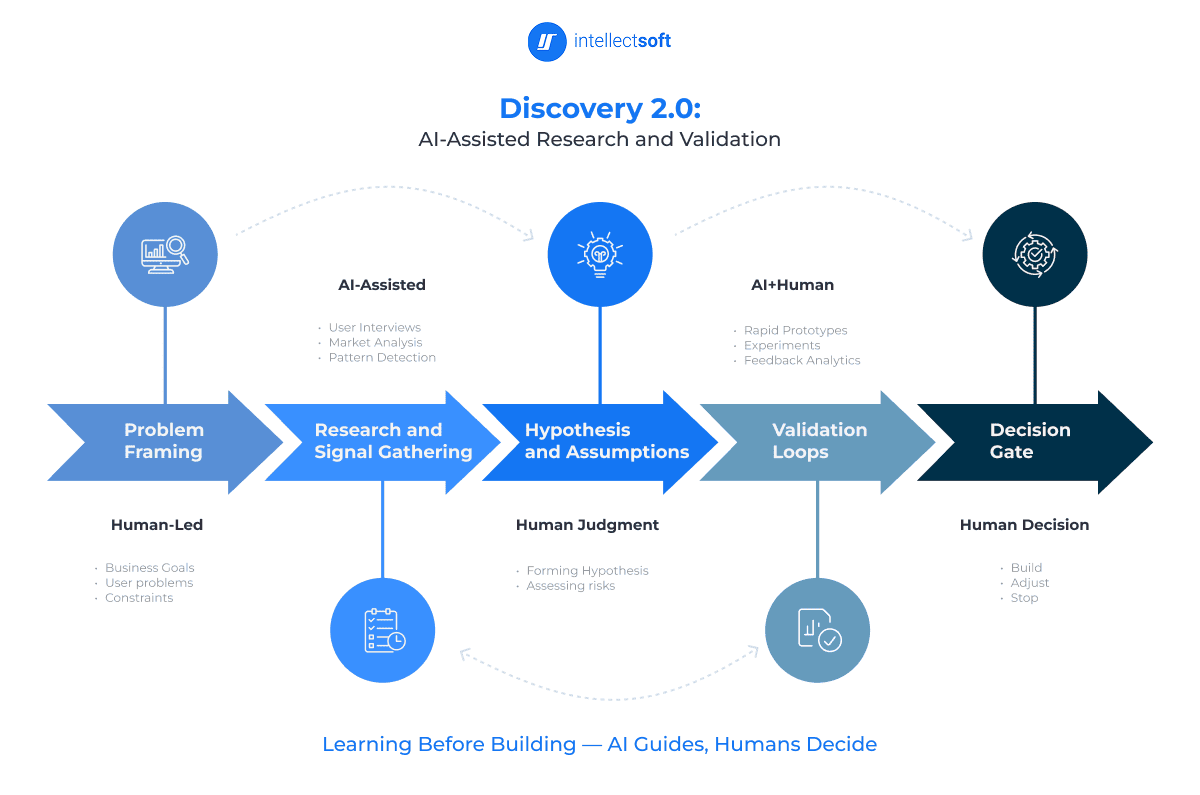
While it has become easier for us to acquire and analyze data using AI, it has not changed what data acquisition is all about. The difficult part remains the same: figuring out what users really do and where our guesses are wrong.
Problem discovery: listening before building
Strong discovery starts with reality (avoid opinions and assumptions). How are people using the product today? Where do they hesitate, work around limitations, or quietly give up? These signals rarely appear in one place. They arise in interviews, statistics, support requests, and sales conversations. When you consider them all together, the patterns become clear.
AI for synthesis: separating signal from noise
AI can help teams move through large volumes of input more quickly. But speed alone shouldn’t be your goal. What is valuable is clarity. What themes repeat? Which job keeps coming up? Where do early hypotheses hold, and where do they fall apart? AI helps surface these questions faster, leaving judgment where it belongs: with the team.
Validation design: testing before scaling
Discovery without validation is still a guess. Before investing heavily, teams need to know: will customers be interested in this product? Will they pay for it? Basic tests like landing pages, initial product designs, concierge MVPs, and pricing tests can help provide answers to these types of questions, especially when the cost of being incorrect is relatively low.
Competitive intelligence: figuring out how to compete
Completing a competitive analysis provides clarity about the competitive landscape and the rules of the game. What do customers already expect? Where are competitors strong? And where is there room to focus instead of spreading too thin? Clear answers here shape both the product and the strategy that supports it.
Build the Product Foundation: Architecture for a Platform Mindset
The choices you make about the architecture of your successful software product development now will affect everything that comes after it. These choices have an effect on how easily you can change direction and how much more expensive growth will be in the future. At this point, the goal is to build a strong base that will let you learn, change, and grow without rework and making development too complicated.
Platform or product: decide what you need
From the start, not every product needs to be a platform. You may need to use APIs and integrations if your product has to integrate with other systems, if it has to help partners, or if it has to allow people to make changes themselves. If you’re adding platform features too early, they may slow you down and cause you to lose focus on the real problem, which is the job that you have to do for your customers.
Build or buy: focus your effort where it matters
You do not have to do everything by yourself. There are already solutions that can handle identity and payments, search and analytics, notifications, and workflow in a way through integrations. So it is worth focusing on what makes your product different from products like yours. Keep the architecture simple until complexity is justified
Keep the architecture simple until complexity is justified
In the beginning, simpler systems are usually the best. A modular monolith lets you make progress without making the codebase a mess. Clear internal boundaries help you change or extend parts of the system later. More complex architectures are worth introducing only when usage and growth demand them.
Set up data foundations early
Good data practices are much easier to establish early than to correct later. Basic event tracking provides visibility into how users interact with the product. A data warehouse or data lake creates the foundation for analyzing usage as the product scales. Clear definitions and basic governance make sure that teams trust and consistently interpret the data. An advanced analytics setup is not required at the start, but a clear path for learning from user behavior is important.
A Primer on Understanding the Software Product Development Process: A Practical Product Blueprint Towards 2026
The software product development process (also called the software product development life cycle) has evolved from linear delivery to an adaptive system that promotes learning, adaptation, and sustainability in its entirety. A good product blueprint is essential in keeping things organized without forcing individuals to make decisions too quickly. In the image, you can see how we work with our clients. One important thing to note: development doesn’t end at handover. We continue to support and optimize your product over time.
AI in software product development: where it helps and where it hurts
AI has become a practical part of product software development. The key question is, is it helping your team think better, or is it helping your team work faster, more efficiently, and better? AI can make things better in terms of speed and efficiency. AI can also make things worse and create noise, risk, and dangerous confidence. The difference isn’t the technology; the difference is where you put it and what human judgment you leave in the loop.
AI-assisted engineering: support, not substitution
In engineering, we can get the most benefit out of AI as a helper, and we can think of several areas where we can use AI, such as code generation, code review, code refactoring, and code documentation. The benefit here is to unburden engineers from doing mundane work. AI can certainly accelerate the process, but the responsibility for architecture, correctness, and maintainability remains with the engineering team.
AI in the product: practical, visible value
In the product itself, AI manifests as copilots, summarization, classification, or recommendation systems. These systems are most effective if they help users save time or make better decisions quickly. The question is: Does this feature make it easier for people to work, or does it make it harder? The value of AI integration has to be demonstrated within the product.
Human-in-the-loop design: keeping control
Good AIs are never fully automated. They use a human-in-the-loop design, which provides confidence thresholds, fallbacks, and escalation mechanisms that provide security for the user and the business. In cases of high uncertainty, the system should slow down, prompt, or go back to the human.
Quality Risks: Knowing Where Things Break
There are also quality risks associated with AI, and these cannot be ignored either. Hallucinations, model drift, prompt injection, and silent performance degradation are not unusual events. However, there are also ways to address these quality issues. This involves having a means of evaluation and testing, and being strict about the use of results.
LLM Cost and Performance: Token Economics as Product Management
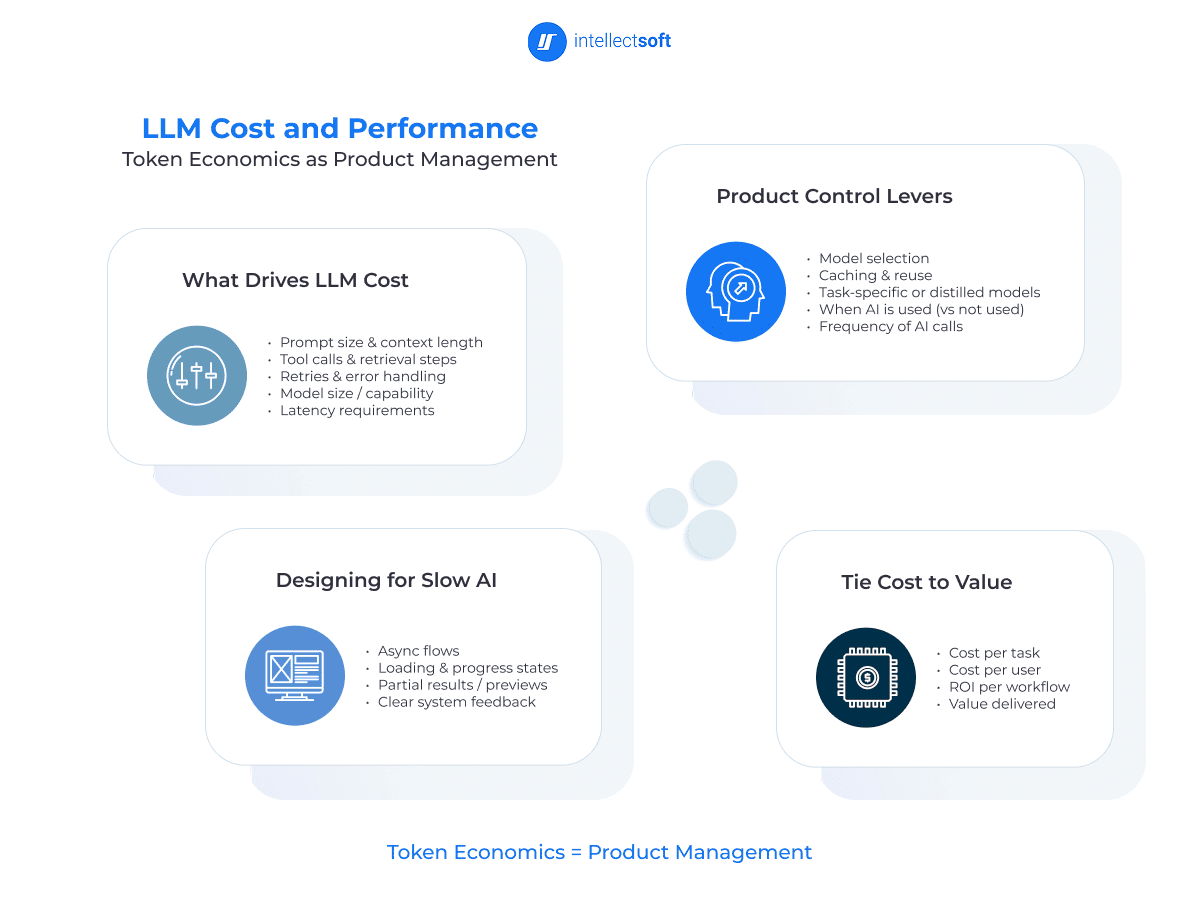
However, when the use of an AI model moves away from experimentation and into the world of actual use, a new set of questions arises. For instance, there are questions about the actual cost of each use and the time spent on the use of the model. When the use of an AI model is scaled, the impact on the actual business is also affected. This means that the cost and performance of the model are no longer just about the engineering of the model.
What drives cost: understanding the mechanics
LLM costs add up in ways that are not always obvious. Prompt size, how much context you send, tool calls, retrieval steps, retries, and error handling all contribute to the final bill. Even small decisions made during the course of development can become costly decisions over time.
Cutting costs without compromising quality
Cutting costs doesn’t necessarily mean compromising quality. Many teams have successfully reduced costs by being more discerning in how and where they use AI. In other words, some teams have successfully reduced costs by using smaller models, caching responses, and distilling models to specific use cases, all while keeping quality high.
Latency budgets: designing for slow AI
AI is not always fast, and pretending it is creates a poor user experience. Good products plan for delays instead of hiding them. Asynchronous flows, previews, partial results, and clear feedback help users understand what is happening and what to expect next. When delays are visible and explained, they feel manageable rather than frustrating.
Measurement: tying cost to value
AI features should be measured like any other part of the product. Metrics such as cost per task, cost per user, and return on investment per workflow help teams decide what to scale, what to improve, and what to remove. When the value is clear, the cost is easier to justify. When it is not, even small expenses become hard to defend.
Product software development teams know that data is a key part of the product system. They look for signs that show how people use products, come up with systematic techniques to test their assumptions, and establish trust in the data that helps them make decisions. These data-driven product development strategies create feedback loops that build on what you’ve learned, lower uncertainty, and speed up and improve development more than your competitors can.
Important telemetry
Telemetry focuses on signs that explain behavior. These terms, such as “events,” “funnels,” “cohorts,” and “activation drivers,” show what users do, how they move through the system, and where they get trapped.
Experimentation systems: how to learn with purpose
Product software development teams can move from opinion to fact with the help of experiments. With the help of A/B tests, holdouts, and basic causal reasoning, you can figure out what really causes outcomes instead of just what seems to be linked. Simple studies can help us test our ideas and make better choices.
Quality of data and government: trust before scale
It is easier to understand and stop misuse when there is clear ownership, shared standards, data lineage, and access control. Governance is the process of making sure that choices are based on facts that everyone agrees on and trusts.
Learning loops that never end
User comments, product analytics, and AI evaluation should all work hand-in-hand. Insights guide experiments, tests shape the road map, and results help make the product and the systems that support it better. After some time, it gets harder and harder to copy this feedback loop and even harder to beat it.
Choosing a Software Product Development Methodology in 2026
In practice, most product software development teams combine multiple software product development methodologies rather than follow a single rigid framework. The right way to develop software products depends on how much uncertainty there is, what the rules are, and how quickly feedback needs to change the direction.
Methodologies differ more in emphasis than in principle. Agile and Scrum prioritize fast feedback and frequent reassessment. Kanban focuses on flow and reducing bottlenecks. DevOps brings reliability and release discipline into everyday work. Waterfall trades flexibility for predictability in environments where change is costly or constrained. Hybrid models attempt to balance learning and execution by running discovery and delivery in parallel.
Choosing between them is a business decision before it is a technical one. Are requirements still forming or largely known? How often do priorities change? How much uncertainty can the organization tolerate? How quickly do you need to show progress, and how expensive is rework if you get it wrong?
Successful software development teams make these trade-offs explicit. They choose deliberately, adapt as they learn, and focus on outcomes rather than strict loyalty to any single framework.
Building a Software Product Development Team: Roles and How Work Gets Done
A strong product is rarely the result of talent alone. It depends on how the team is set up and how well people work together. Who makes decisions? Who owns quality? And how does work actually move from idea to release?
Putting skilled people in a room is not enough. What matters is assembling the right mix of roles and giving them a clear way of working. Team structure will vary based on product complexity and scale, but most successful products start with a similar core setup.
A common core product team
For many software products, a small, focused core team works best:
- Product Manager
- Design
- Tech Lead
- QA
- Data specialists
- DevOps
Additional roles can be added as the product evolves.
When to add specialists
Not every specialist needs to be on the team from day one. That said, in regulated industries, compliance should be involved early, even if only part-time. Early input helps set clear boundaries around data, security, and risk and avoids painful rework later.
Other specialists, such as AI, security, or deep domain experts, usually join as the product grows and new challenges appear. The key is to bring in the expertise you need when the risk shows up, not after the problem has already formed.
How teams stay aligned
Successful software development teams work best with a clear, predictable rhythm, but the exact setup often depends on the delivery partner. Some partners are closely involved throughout, while others may join more intensively during discovery, sometimes even on-site, and then shift to a lighter cadence.
In practice, weekly check-ins keep execution on track. Monthly reviews focus on outcomes, priorities, and trade-offs. Quarterly sessions create space to step back and reassess direction. This structure keeps teams aligned while avoiding unnecessary meetings or processes for process’s sake.
Documentation that actually helps
Lightweight, living documents help teams stay aligned as the product grows. They keep everyone focused on what matters and reduce confusion as decisions evolve.
Outsourced Software Product Development: How to Reduce Delivery Risk
Outsourced software product development can speed up delivery and give you access to specialized knowledge, but only if ownership, governance, and decision-making are clear throughout the process.
Many companies choose outsourced software product development as a way to de-risk early stages while maintaining flexibility as the product evolves.
Choosing the right engagement model
There’s no universal outsourced software product development setup that works for everyone. If the product is core to your business and will evolve over time, a dedicated team usually makes the most sense. If the scope is clear and unlikely to change, a project-based model can work well. If you just need extra hands or a specific skill for a while, staff augmentation is often enough.
The right choice of outsourced software product development depends on how much discovery is still ahead, how often priorities change, and how closely the team needs to work with you day to day.
Picking the right partner
When choosing a vendor, look past the slides and sales talk. Look at their case studies. Ask how they run discovery. Ask what happens when requirements change. Ask if they’ve worked with products (especially when it comes to complexity) like yours. A good partner will challenge your assumptions early.
Contracts and governance
Clear agreements save a lot of pain later. Defined scope, clear service expectations, a change process, and success metrics help everyone understand how decisions are made. It may feel like you are locking yourself in, but in reality you are avoiding confusion when trade-offs appear.
Good governance gives you structure without getting in the way.
Communication and visibility
What hurts projects most are the things no one sees in time. Regular demos, transparent communication, shared KPIs, unified code reviews, and one clear source of truth will surface problems early. That visibility makes it easier to adjust before delays set in.
Common Failure Signals—and How to Avoid Them
Even successful software product development runs into problems at some point. Finding them as early as possible is important so they won’t ruin your entire process later. To make sure you’re doing the right thing, ask yourself these questions:
Are you building the right product?
Weak discovery often leads teams to build products along with features based on their assumptions or surface-level metrics. With such an approach, there’s a chance you and your team get a lot of activity with very little impact. Only clear problem definition (through market research), customer-centric orientation, and outcome-focused metrics keep effort pointed in the right direction.
Is the architecture growing faster than the product?
If you overcomplicate design in the beginning, you’ll add coordination and maintenance overhead. The simpler the setups, the better; once users demand more, you can enrich your product and add more people to work on it.
Do you trust your data?
Missing events, inconsistent definitions, and dashboards that tell different information — undermine confidence and confuse decision-making. Following the basic tracking and shared definitions makes decisions easier and more reliable.
Is AI under control?
Without clear evaluation, monitoring, and cost awareness, AI quality drops, and your expenses grow. Regular checkups and clear standards keep AI dependable (rather than unpredictable).
Are you preparing for growth early enough?
Teams often address security, compliance, and reliability only when growth demands it. Introducing guardrails early, especially in regulated environments, reduces rework and makes scaling far smoother.
Software Product Development Deliverables Checklist
Clear deliverables help everyone stay on the same page and show progress. You and everyone else on the team should use this list to agree on what “done” means at each step. Let’s go over what we discussed earlier, summarize the deliverables, and arrange them in sequence.
Strategy
You build a clear ideal customer profile, positioning, and KPI tree to show who the product is for and how success will be measured. A focused roadmap turns a strategy into a plan for action instead of a list of things you want to do.
Discovery
Discovery changes what we think we know into what we learn. Research synthesis makes sense of inputs that are all over the place. Hypotheses clarify risks. Before a lot of time and money are spent, an experiment plan says what will be tested first and why.
Plan
Design turns ideas into experiences. Teams can see how the product works with the help of user flows and prototypes. A design system makes sure that everything stays the same as more people work on it and the product gets bigger.
Engineering
Engineering outputs give a delivery structure. Early decisions about architecture set clear limits. Automated pipelines make releases less risky, and testing and observability help make sure that the digital product development
AI gives value when it is used on purpose. Choosing models carefully, regularly checking them, setting clear limits, and agreeing on a cost envelope can help avoid surprises as usage increases. This is where intention becomes control.
Data
You need good data to make good decisions. A clear tracking plan shows what needs to be measured. A semantic layer makes sure that all teams are using the same numbers. Defined governance roles make it clear who is in charge of the data and who is responsible for it.
How to Choose a Software Product Development Partner
Picking a strong software product development partner is like getting a partner who thinks with you. When things get unclear, the right partner helps you get your bearings. They help you set goals, make smart decisions, and turn software into something that helps the business. They support end-to-end successful software product development, from early discovery through scaling and optimization, while helping teams develop new software product ideas with confidence.
Signals of a Strong Partner: Outcome Focus, Proof, and Repeatable Playbooks
Strong partners know what they want to happen. They don’t think that delivering a load of work is a sign of success; they think that their work actually should impact (for better) business processes. You should be able to see this in their previous work, where they explain why they made certain choices and what they learned along the way.
Find partners who:
- Link technical choices to business outcomes
- Can talk about the choices they’ve made
- Use the same methods of working that fit the situation.
Questions to Ask: Discovery, AI Evaluation, Cost Control, and Platform Readiness
Good partners are okay with not knowing what’s going to happen and know how to deal with it. Ask them how they handle discovery when the requirements aren’t clear. Inquire about their perspective on long-term operating expenses. And ask them how they make systems that can change without breaking.
Calm explanations, realistic limits, and the ability to talk about what not to build are all signs of clear thinking.
What “Good” Looks Like in the First 30 to 60 Days
In the first month or two, priorities should be clearer, risks should be more obvious, and people should talk about their assumptions. You should see real progress, like early prototypes, decisions that have been proven to be right, or working parts. You should also know what will happen next and why. These are signals of successful software product development.
Why Companies Work With Us
When the cost of making the wrong choice is high, teams come to Intellectsoft for custom software product development
Our product development services cover the full spectrum of digital product development, from software product design and development through scalable, successful software product development for regulated and enterprise environments. We help with making custom software products and enterprise software products and developing a software product for mid-sized and startup business teams that need reliability, compliance, and long-term growth.
Enterprise software product development
We support software product development for enterprise organizations, delivering scalable software product development made for performance, security, and your long-term growth.
Understanding Business
While building software products
Our Commitment to Partnership
We build long-term partnerships by adapting to our clients’ needs and thinking alongside them as a partner.
End-to-end product development ownership
Our teams provide end-to-end software product development, guiding products from early discovery and architecture through delivery, scaling, and continuous improvement.
Purposeful AI adoption
We apply AI in software product development with intent, using AI-driven software product development only where it strengthens decision-making, efficiency, and measurable business outcomes.
How We Get It Done
Clear Communication
You can see progress, risks, and trade-offs throughout the engagement. There are no secret choices.
Models of Engagement That Are Flexible
We change the way we work based on the product and the company, whether it’s a dedicated team or a team extension. The setup changes when needs change.
Always getting better
When products are used in real life, new problems come up. We stay involved, look at what’s working, and make changes carefully instead of breaking things.
How do I know if my product idea is worth building before I invest months of development time?
Talk to people who might use your product, look at what they’re doing now to solve the issue, and look for ways they’ve come up with to get around it. These are signs of real pain. To find out if people are really interested, use simple validation tools like price tests, landing pages, or concierge MVPs. It’s important to find out if people will pay for your idea while the chance of being wrong is still low.
My AI feature prices went way up once it came out. How can I keep them in control?
AI costs grow in ways that aren’t clear when the system is first being built. When real people start using it, prompt size, tool calls, retry logic, and recovery steps quickly add up. Costs can be kept under control best if they are built into the product from the beginning, rather than being added on later. Some useful levers are using smaller or fine-tuned models for certain tasks, caching answers that are given more than once, and keeping track of the cost per task or cost per user to see where your money is going and whether the value is worth it.
Should I hire a development team in-house or outsource to an agency?
In fact, for most early-stage products, outsourcing to the right software development partner is the speedier and less risky option, as long as you choose wisely. A strong company has a team ready to go that has worked in product, design, engineering, and QA, so you don’t have to spend time and money establishing one from scratch. The most important thing is to choose a partner who challenges the scope, asks tough questions about strategy, and respects your product’s success as their own.



Source link